A request concerning entering domain names

Hi, When I enter a domain name such as icann.org, I just press nine keys in sequence, i, c and so on. Five keys for icann, then one for the dot, then three for org. When a Chinese user enters a Chinese domain in a similarly simple way, the result may be 星巴克。商标, while the correct result would be 星巴克.商标 (note the different dots). Entering the correct domain requires entering 星巴克, changing keyboard layout to get latin letters, entering the ASCII dot, changing keyboard layout back, then entering 商标. Bothersome. You will not be surprised to learn that forgetting to switch layout is a common mistake. I’d like to know which other locales have a similar problem, and for that I want to ask a favour. There are many people here who use different keyboard input methods. If your keyboard input method has a similar problem, can you send me the dot and an example domain (which does not need to exist, something like example.yourtld would do)? Offlist please. That is to arnt.gulbrandsen@icann.org. If a keyboard method uses non-latin letters but includes the ASCII full stop, I’m interested in that too. Always heartening to know when something is not buggy. -- Arnt Gulbrandsen UA Technology Sr. Manager, ICANN +32 492 374706

I think that your decribed senario is the common senario Chinese users commonly encounter. Another method is to copy and paste it. BTW, many Chinese input methods have Associative input method. You can only input some initial letters and get the whole Chinese characters. to input 星巴克, you just need to input xbk. Jiankang Yao From: Arnt Gulbrandsen via UA-EAI Date: 2023-09-19 22:21 To: ua-tech@icann.org; ua-eai@icann.org Subject: [UA-EAI] A request concerning entering domain names Hi, When I enter a domain name such as icann.org, I just press nine keys in sequence, i, c and so on. Five keys for icann, then one for the dot, then three for org. When a Chinese user enters a Chinese domain in a similarly simple way, the result may be 星巴克。商标, while the correct result would be 星巴克.商标 (note the different dots). Entering the correct domain requires entering 星巴克, changing keyboard layout to get latin letters, entering the ASCII dot, changing keyboard layout back, then entering 商标. Bothersome. You will not be surprised to learn that forgetting to switch layout is a common mistake. I’d like to know which other locales have a similar problem, and for that I want to ask a favour. There are many people here who use different keyboard input methods. If your keyboard input method has a similar problem, can you send me the dot and an example domain (which does not need to exist, something like example.yourtld would do)? Offlist please. That is to arnt.gulbrandsen@icann.org. If a keyboard method uses non-latin letters but includes the ASCII full stop, I’m interested in that too. Always heartening to know when something is not buggy. -- Arnt Gulbrandsen UA Technology Sr. Manager, ICANN +32 492 374706

Arnt: Jiankang's excellent reply brought up an insight which you might find helpful: I think your question assumes the use of a relatively simple functional keyboard layout[1], where each press of a key on a keyboard delivers a character to the application. (This simple model is made a little more complex by shift keys[2], dead keys[3] for adding accents, modes, etc.) Basically, it is the concept of a mechanical typewriter translated into software. A key press triggers a character, with little state or intermediate computation or UI. However, for many languages, including Chinese and Japanese, it is typical to use an input method editor[4]. This is an arbitrarily complex piece of software, which receives one more many key presses, combines it with state such as dictionaries of character pronunciations or recent user input, and delivers multiple characters to the application at once. Google's GBoard keyboard on Android devices, and Apple's keyboard for iOS devices, have some degree of word prediction and spelling correction. In that respect they partly use the input method editor model in addition to the functional keyboard layout model. By the way, there are other models of text entry. A chorded keyboard[5] is a third model. It lets the user press multiple keys at once, and reads the set of keys pressed at the moment the user releases the keys. It basically ignores the action of the user pressing keys. This is in contrast to conventional keyboards, which read the keys at the moment the users presses them. You write:
Entering the correct domain requires entering 星巴克, changing keyboard layout to get latin letters, entering the ASCII dot, changing keyboard layout back, then entering 商标. Bothersome. You will not be surprised to learn that forgetting to switch layout is a common mistake.
That very model of pressing keys to "enter" characters, pressing keys to change keyboard layout (i.e. mode) , and pressing keyboard to get a dot, is framed by the functional keyboard layout model. In an input method editor model, it would be completely normal to expect the editor to accept user input of "星巴克。商标" (with a Chinese dot) and, if the context demands it, deliver the corrected text of "星巴克.商标" (with an ASCII dot), to the application. In other words, it is reasonable for the user to not do the mode change, and to expect an editor to deliver characters as if the mode did change. So, to get useful answers to your question, you might want to focus on languages and systems which use a functional keyboard layout, because languages and systems which use input method editors might not experience the obstacle which interests you. Best regards, —Jim DeLaHunt [1] <https://en.wikipedia.org/wiki/Keyboard_layout#Functional_layouts> [2] <https://en.wikipedia.org/wiki/Keyboard_layout#Shift_key> [3] <https://en.wikipedia.org/wiki/Keyboard_layout#Dead_keys> [4] <https://en.wikipedia.org/wiki/Input_method> [5] <https://en.wikipedia.org/wiki/Chorded_keyboard> On 2023-09-24 23:13, Jiankang Yao via UA-EAI wrote:
I think that your decribed senario is the common senario Chinese users commonly encounter.
Another method is to copy and paste it.
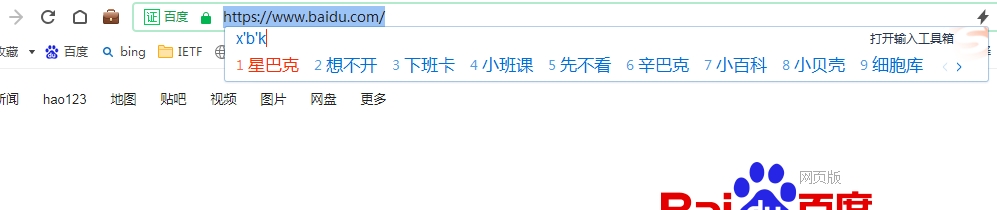
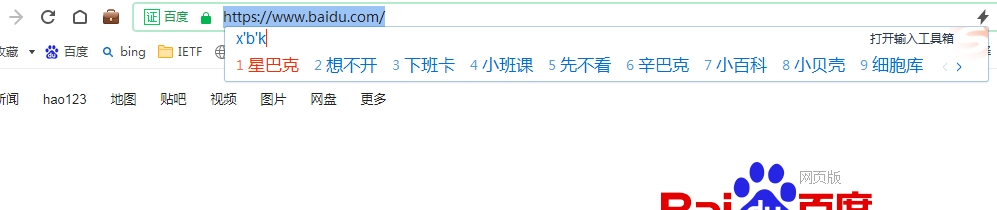
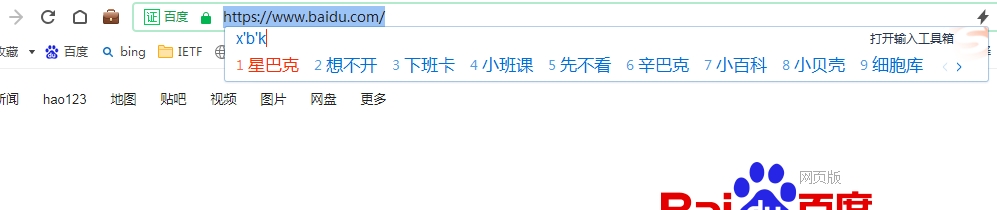
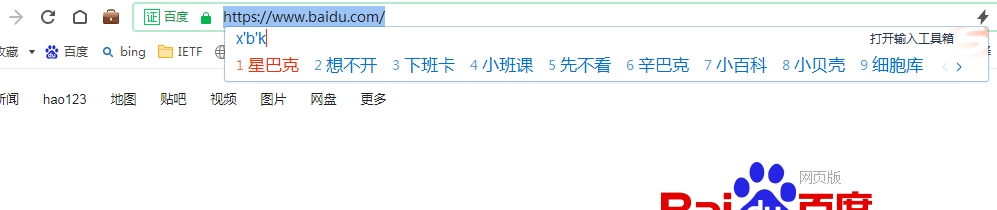
BTW, many Chinese input methods have Associative input method. You can only input some initial letters and get the whole Chinese characters. to input 星巴克, you just need to input xbk.
------------------------------------------------------------------------ Jiankang Yao
*From:* Arnt Gulbrandsen via UA-EAI <mailto:ua-eai@icann.org> *Date:* 2023-09-19 22:21 *To:* ua-tech@icann.org; ua-eai@icann.org *Subject:* [UA-EAI] A request concerning entering domain names
Hi,
When I enter a domain name such as icann.org, I just press nine keys in sequence, i, c and so on. Five keys for icann, then one for the dot, then three for org.
When a Chinese user enters a Chinese domain in a similarly simple way, the result may be 星巴克。商标, while the correct result would be 星巴克.商标(note the different dots). Entering the correct domain requires entering 星巴克, changing keyboard layout to get latin letters, entering the ASCII dot, changing keyboard layout back, then entering 商标. Bothersome. You will not be surprised to learn that forgetting to switch layout is a common mistake.
I’d like to know which other locales have a similar problem, and for that I want to ask a favour.
There are many people here who use different keyboard input methods. If your keyboard input method has a similar problem, can you send me the dot and an example domain (which does not need to exist, something like example.yourtld would do)? Offlist please. That is to arnt.gulbrandsen@icann.org.
If a keyboard method uses non-latin letters but includes the ASCII full stop, I’m interested in that too. Always heartening to know when something is not buggy.
--
Arnt Gulbrandsen
UA Technology Sr. Manager, ICANN
+32 492 374706
_______________________________________________ UA-EAI mailing list UA-EAI@icann.org https://mm.icann.org/mailman/listinfo/ua-eai _______________________________________________ By submitting your personal data, you consent to the processing of your personal data for purposes of subscribing to this mailing list accordance with the ICANN Privacy Policy (https://www.icann.org/privacy/policy) and the website Terms of Service (https://www.icann.org/privacy/tos). You can visit the Mailman link above to change your membership status or configuration, including unsubscribing, setting digest-style delivery or disabling delivery altogether (e.g., for a vacation), and so on.
-- --Jim DeLaHunt,jdlh@jdlh.com http://blog.jdlh.com/ (http://jdlh.com/) multilingual websites consultant, Vancouver, Canada

Hi, I learn 😉 I should have told you what I was thinking about: Safari, Chrome and Firefox. Stupid of me. I sent off the original mail in the few minutes before a meeting and didn’t have time to think clearly about what I wanted to say. Sorry. All three parse URLs entered by the user, all three are open source, I can submit changes to all three, and I wanted to learn more about the appropriate changes. Arnt From: Душан Стојичевић <dusan@dukes.in.rs> Date: Tuesday, 26 September 2023 at 01:49 To: Jim DeLaHunt <list+uasg@jdlh.com> Cc: Arnt Gulbrandsen <arnt.gulbrandsen@icann.org>, Jiankang Yao <yaojk@cnnic.cn>, "ua-tech@icann.org" <ua-tech@icann.org>, "ua-eai@icann.org" <ua-eai@icann.org> Subject: [Ext] Re: [UA-Tech] [UA-EAI] A request concerning entering domain names Dear Jim, As I said, speaking for Windows language packs and code pages, and none of the browsers, email clients or any type of location bars will change dots in Arabic or Armenian (must be user, switching the keyboard layout), or add @ in Cyrillic EAI - because it doesn't exist in particular code page. I agree, in many other, especially mobile OSs, there is some corrections added, so I agree with you. I believe that Arnt was asking for windows based systems. Regards, Dušan 26. 9. 2023. 01:14, Jim DeLaHunt via UA-Tech <ua-tech@icann.org> је написао/ла: Arnt: Jiankang's excellent reply brought up an insight which you might find helpful: I think your question assumes the use of a relatively simple functional keyboard layout[1], where each press of a key on a keyboard delivers a character to the application. (This simple model is made a little more complex by shift keys[2], dead keys[3] for adding accents, modes, etc.) Basically, it is the concept of a mechanical typewriter translated into software. A key press triggers a character, with little state or intermediate computation or UI. However, for many languages, including Chinese and Japanese, it is typical to use an input method editor[4]. This is an arbitrarily complex piece of software, which receives one more many key presses, combines it with state such as dictionaries of character pronunciations or recent user input, and delivers multiple characters to the application at once. Google's GBoard keyboard on Android devices, and Apple's keyboard for iOS devices, have some degree of word prediction and spelling correction. In that respect they partly use the input method editor model in addition to the functional keyboard layout model. By the way, there are other models of text entry. A chorded keyboard[5] is a third model. It lets the user press multiple keys at once, and reads the set of keys pressed at the moment the user releases the keys. It basically ignores the action of the user pressing keys. This is in contrast to conventional keyboards, which read the keys at the moment the users presses them. You write: Entering the correct domain requires entering 星巴克, changing keyboard layout to get latin letters, entering the ASCII dot, changing keyboard layout back, then entering 商标. Bothersome. You will not be surprised to learn that forgetting to switch layout is a common mistake. That very model of pressing keys to "enter" characters, pressing keys to change keyboard layout (i.e. mode) , and pressing keyboard to get a dot, is framed by the functional keyboard layout model. In an input method editor model, it would be completely normal to expect the editor to accept user input of "星巴克。商标" (with a Chinese dot) and, if the context demands it, deliver the corrected text of "星巴克.商标" (with an ASCII dot), to the application. In other words, it is reasonable for the user to not do the mode change, and to expect an editor to deliver characters as if the mode did change. So, to get useful answers to your question, you might want to focus on languages and systems which use a functional keyboard layout, because languages and systems which use input method editors might not experience the obstacle which interests you. Best regards, —Jim DeLaHunt [1] <https://en.wikipedia.org/wiki/Keyboard_layout#Functional_layouts> [en.wikipedia.org]<https://urldefense.com/v3/__https:/en.wikipedia.org/wiki/Keyboard_layout*Fun...> [2] <https://en.wikipedia.org/wiki/Keyboard_layout#Shift_key> [en.wikipedia.org]<https://urldefense.com/v3/__https:/en.wikipedia.org/wiki/Keyboard_layout*Shi...> [3] <https://en.wikipedia.org/wiki/Keyboard_layout#Dead_keys> [en.wikipedia.org]<https://urldefense.com/v3/__https:/en.wikipedia.org/wiki/Keyboard_layout*Dea...> [4] <https://en.wikipedia.org/wiki/Input_method> [en.wikipedia.org]<https://urldefense.com/v3/__https:/en.wikipedia.org/wiki/Input_method__;!!Pt...> [5] <https://en.wikipedia.org/wiki/Chorded_keyboard> [en.wikipedia.org]<https://urldefense.com/v3/__https:/en.wikipedia.org/wiki/Chorded_keyboard__;...> On 2023-09-24 23:13, Jiankang Yao via UA-EAI wrote: I think that your decribed senario is the common senario Chinese users commonly encounter. Another method is to copy and paste it. BTW, many Chinese input methods have Associative input method. You can only input some initial letters and get the whole Chinese characters. to input 星巴克, you just need to input xbk. [cid:part1.fts5WCqX.dToA0YQ0@jdlh.com] ________________________________ Jiankang Yao From: Arnt Gulbrandsen via UA-EAI<mailto:ua-eai@icann.org> Date: 2023-09-19 22:21 To: ua-tech@icann.org<mailto:ua-tech@icann.org>; ua-eai@icann.org<mailto:ua-eai@icann.org> Subject: [UA-EAI] A request concerning entering domain names Hi, When I enter a domain name such as icann.org, I just press nine keys in sequence, i, c and so on. Five keys for icann, then one for the dot, then three for org. When a Chinese user enters a Chinese domain in a similarly simple way, the result may be 星巴克。商标, while the correct result would be 星巴克.商标 (note the different dots). Entering the correct domain requires entering 星巴克, changing keyboard layout to get latin letters, entering the ASCII dot, changing keyboard layout back, then entering 商标. Bothersome. You will not be surprised to learn that forgetting to switch layout is a common mistake. I’d like to know which other locales have a similar problem, and for that I want to ask a favour. There are many people here who use different keyboard input methods. If your keyboard input method has a similar problem, can you send me the dot and an example domain (which does not need to exist, something like example.yourtld would do)? Offlist please. That is to arnt.gulbrandsen@icann.org<mailto:arnt.gulbrandsen@icann.org>. If a keyboard method uses non-latin letters but includes the ASCII full stop, I’m interested in that too. Always heartening to know when something is not buggy. -- Arnt Gulbrandsen UA Technology Sr. Manager, ICANN +32 492 374706 _______________________________________________ UA-EAI mailing list UA-EAI@icann.org<mailto:UA-EAI@icann.org> https://mm.icann.org/mailman/listinfo/ua-eai _______________________________________________ By submitting your personal data, you consent to the processing of your personal data for purposes of subscribing to this mailing list accordance with the ICANN Privacy Policy (https://www.icann.org/privacy/policy) and the website Terms of Service (https://www.icann.org/privacy/tos). You can visit the Mailman link above to change your membership status or configuration, including unsubscribing, setting digest-style delivery or disabling delivery altogether (e.g., for a vacation), and so on. -- --Jim DeLaHunt, jdlh@jdlh.com<mailto:jdlh@jdlh.com> http://blog.jdlh.com/ [blog.jdlh.com]<https://urldefense.com/v3/__http:/blog.jdlh.com/__;!!PtGJab4!-KkHsIzA2tPoNnx...> (http://jdlh.com/ [jdlh.com]<https://urldefense.com/v3/__http:/jdlh.com/__;!!PtGJab4!-KkHsIzA2tPoNnxnIzkE...>) multilingual websites consultant, Vancouver, Canada
Hi, It’s true, I’m assuming that there are keyboard labels that somehow correspond to what’s entered. I know very well that some locales use different input methods. Those other locales won’t have the bug that I’m looking to fix now, and for which I need to write sentences such as “this bug affects people in [list]”, see? Again, thanks to everyone. (Even those spoilsports who taught me that mail readers have a similar problem. I wanted to fix a bug, not learn that two bugs exist. Demoralising.) Arnt From: Jim DeLaHunt <list+uasg@jdlh.com> Date: Tuesday, 26 September 2023 at 01:15 To: Arnt Gulbrandsen <arnt.gulbrandsen@icann.org> Cc: Jiankang Yao <yaojk@cnnic.cn>, "ua-tech@icann.org" <ua-tech@icann.org>, "ua-eai@icann.org" <ua-eai@icann.org> Subject: [Ext] Re: [UA-EAI] A request concerning entering domain names Arnt: Jiankang's excellent reply brought up an insight which you might find helpful: I think your question assumes the use of a relatively simple functional keyboard layout[1], where each press of a key on a keyboard delivers a character to the application. (This simple model is made a little more complex by shift keys[2], dead keys[3] for adding accents, modes, etc.) Basically, it is the concept of a mechanical typewriter translated into software. A key press triggers a character, with little state or intermediate computation or UI. However, for many languages, including Chinese and Japanese, it is typical to use an input method editor[4]. This is an arbitrarily complex piece of software, which receives one more many key presses, combines it with state such as dictionaries of character pronunciations or recent user input, and delivers multiple characters to the application at once. Google's GBoard keyboard on Android devices, and Apple's keyboard for iOS devices, have some degree of word prediction and spelling correction. In that respect they partly use the input method editor model in addition to the functional keyboard layout model. By the way, there are other models of text entry. A chorded keyboard[5] is a third model. It lets the user press multiple keys at once, and reads the set of keys pressed at the moment the user releases the keys. It basically ignores the action of the user pressing keys. This is in contrast to conventional keyboards, which read the keys at the moment the users presses them. You write: Entering the correct domain requires entering 星巴克, changing keyboard layout to get latin letters, entering the ASCII dot, changing keyboard layout back, then entering 商标. Bothersome. You will not be surprised to learn that forgetting to switch layout is a common mistake. That very model of pressing keys to "enter" characters, pressing keys to change keyboard layout (i.e. mode) , and pressing keyboard to get a dot, is framed by the functional keyboard layout model. In an input method editor model, it would be completely normal to expect the editor to accept user input of "星巴克。商标" (with a Chinese dot) and, if the context demands it, deliver the corrected text of "星巴克.商标" (with an ASCII dot), to the application. In other words, it is reasonable for the user to not do the mode change, and to expect an editor to deliver characters as if the mode did change. So, to get useful answers to your question, you might want to focus on languages and systems which use a functional keyboard layout, because languages and systems which use input method editors might not experience the obstacle which interests you. Best regards, —Jim DeLaHunt [1] <https://en.wikipedia.org/wiki/Keyboard_layout#Functional_layouts> [en.wikipedia.org]<https://urldefense.com/v3/__https:/en.wikipedia.org/wiki/Keyboard_layout*Fun...> [2] <https://en.wikipedia.org/wiki/Keyboard_layout#Shift_key> [en.wikipedia.org]<https://urldefense.com/v3/__https:/en.wikipedia.org/wiki/Keyboard_layout*Shi...> [3] <https://en.wikipedia.org/wiki/Keyboard_layout#Dead_keys> [en.wikipedia.org]<https://urldefense.com/v3/__https:/en.wikipedia.org/wiki/Keyboard_layout*Dea...> [4] <https://en.wikipedia.org/wiki/Input_method> [en.wikipedia.org]<https://urldefense.com/v3/__https:/en.wikipedia.org/wiki/Input_method__;!!Pt...> [5] <https://en.wikipedia.org/wiki/Chorded_keyboard> [en.wikipedia.org]<https://urldefense.com/v3/__https:/en.wikipedia.org/wiki/Chorded_keyboard__;...> On 2023-09-24 23:13, Jiankang Yao via UA-EAI wrote: I think that your decribed senario is the common senario Chinese users commonly encounter. Another method is to copy and paste it. BTW, many Chinese input methods have Associative input method. You can only input some initial letters and get the whole Chinese characters. to input 星巴克, you just need to input xbk. [cid:image001.jpg@01D9F520.B4546A50] ________________________________ Jiankang Yao From: Arnt Gulbrandsen via UA-EAI<mailto:ua-eai@icann.org> Date: 2023-09-19 22:21 To: ua-tech@icann.org<mailto:ua-tech@icann.org>; ua-eai@icann.org<mailto:ua-eai@icann.org> Subject: [UA-EAI] A request concerning entering domain names Hi, When I enter a domain name such as icann.org, I just press nine keys in sequence, i, c and so on. Five keys for icann, then one for the dot, then three for org. When a Chinese user enters a Chinese domain in a similarly simple way, the result may be 星巴克。商标, while the correct result would be 星巴克.商标 (note the different dots). Entering the correct domain requires entering 星巴克, changing keyboard layout to get latin letters, entering the ASCII dot, changing keyboard layout back, then entering 商标. Bothersome. You will not be surprised to learn that forgetting to switch layout is a common mistake. I’d like to know which other locales have a similar problem, and for that I want to ask a favour. There are many people here who use different keyboard input methods. If your keyboard input method has a similar problem, can you send me the dot and an example domain (which does not need to exist, something like example.yourtld would do)? Offlist please. That is to arnt.gulbrandsen@icann.org<mailto:arnt.gulbrandsen@icann.org>. If a keyboard method uses non-latin letters but includes the ASCII full stop, I’m interested in that too. Always heartening to know when something is not buggy. -- Arnt Gulbrandsen UA Technology Sr. Manager, ICANN +32 492 374706 _______________________________________________ UA-EAI mailing list UA-EAI@icann.org<mailto:UA-EAI@icann.org> https://mm.icann.org/mailman/listinfo/ua-eai _______________________________________________ By submitting your personal data, you consent to the processing of your personal data for purposes of subscribing to this mailing list accordance with the ICANN Privacy Policy (https://www.icann.org/privacy/policy) and the website Terms of Service (https://www.icann.org/privacy/tos). You can visit the Mailman link above to change your membership status or configuration, including unsubscribing, setting digest-style delivery or disabling delivery altogether (e.g., for a vacation), and so on. -- --Jim DeLaHunt, jdlh@jdlh.com<mailto:jdlh@jdlh.com> http://blog.jdlh.com/ [blog.jdlh.com]<https://urldefense.com/v3/__http:/blog.jdlh.com/__;!!PtGJab4!57y4iNc7auAg-ga...> (http://jdlh.com/ [jdlh.com]<https://urldefense.com/v3/__http:/jdlh.com/__;!!PtGJab4!57y4iNc7auAg-gaDHqsC...>) multilingual websites consultant, Vancouver, Canada

[WE DO THIS NOT BECAUSE IT IS EASY, BUT BECAUSE WE THOUGHT IT WOULD BE] From: UA-EAI <ua-eai-bounces@icann.org> On Behalf Of Arnt Gulbrandsen via UA-EAI Sent: Monday, October 2, 2023 2:08 AM To: Jim DeLaHunt <list+uasg@jdlh.com> Cc: ua-tech@icann.org; ua-eai@icann.org Subject: [EXTERNAL] Re: [UA-EAI] [Ext] Re: A request concerning entering domain names Hi, It’s true, I’m assuming that there are keyboard labels that somehow correspond to what’s entered. I know very well that some locales use different input methods. Those other locales won’t have the bug that I’m looking to fix now, and for which I need to write sentences such as “this bug affects people in [list]”, see? Again, thanks to everyone. (Even those spoilsports who taught me that mail readers have a similar problem. I wanted to fix a bug, not learn that two bugs exist. Demoralising.) Arnt From: Jim DeLaHunt <list+uasg@jdlh.com<mailto:list+uasg@jdlh.com>> Date: Tuesday, 26 September 2023 at 01:15 To: Arnt Gulbrandsen <arnt.gulbrandsen@icann.org<mailto:arnt.gulbrandsen@icann.org>> Cc: Jiankang Yao <yaojk@cnnic.cn<mailto:yaojk@cnnic.cn>>, "ua-tech@icann.org<mailto:ua-tech@icann.org>" <ua-tech@icann.org<mailto:ua-tech@icann.org>>, "ua-eai@icann.org<mailto:ua-eai@icann.org>" <ua-eai@icann.org<mailto:ua-eai@icann.org>> Subject: [Ext] Re: [UA-EAI] A request concerning entering domain names Arnt: Jiankang's excellent reply brought up an insight which you might find helpful: I think your question assumes the use of a relatively simple functional keyboard layout[1], where each press of a key on a keyboard delivers a character to the application. (This simple model is made a little more complex by shift keys[2], dead keys[3] for adding accents, modes, etc.) Basically, it is the concept of a mechanical typewriter translated into software. A key press triggers a character, with little state or intermediate computation or UI. However, for many languages, including Chinese and Japanese, it is typical to use an input method editor[4]. This is an arbitrarily complex piece of software, which receives one more many key presses, combines it with state such as dictionaries of character pronunciations or recent user input, and delivers multiple characters to the application at once. Google's GBoard keyboard on Android devices, and Apple's keyboard for iOS devices, have some degree of word prediction and spelling correction. In that respect they partly use the input method editor model in addition to the functional keyboard layout model. By the way, there are other models of text entry. A chorded keyboard[5] is a third model. It lets the user press multiple keys at once, and reads the set of keys pressed at the moment the user releases the keys. It basically ignores the action of the user pressing keys. This is in contrast to conventional keyboards, which read the keys at the moment the users presses them. You write: Entering the correct domain requires entering 星巴克, changing keyboard layout to get latin letters, entering the ASCII dot, changing keyboard layout back, then entering 商标. Bothersome. You will not be surprised to learn that forgetting to switch layout is a common mistake. That very model of pressing keys to "enter" characters, pressing keys to change keyboard layout (i.e. mode) , and pressing keyboard to get a dot, is framed by the functional keyboard layout model. In an input method editor model, it would be completely normal to expect the editor to accept user input of "星巴克。商标" (with a Chinese dot) and, if the context demands it, deliver the corrected text of "星巴克.商标" (with an ASCII dot), to the application. In other words, it is reasonable for the user to not do the mode change, and to expect an editor to deliver characters as if the mode did change. So, to get useful answers to your question, you might want to focus on languages and systems which use a functional keyboard layout, because languages and systems which use input method editors might not experience the obstacle which interests you. Best regards, —Jim DeLaHunt [1] <https://en.wikipedia.org/wiki/Keyboard_layout#Functional_layouts> [en.wikipedia.org]<https://urldefense.com/v3/__https:/en.wikipedia.org/wiki/Keyboard_layout*Fun...> [2] <https://en.wikipedia.org/wiki/Keyboard_layout#Shift_key> [en.wikipedia.org]<https://urldefense.com/v3/__https:/en.wikipedia.org/wiki/Keyboard_layout*Shi...> [3] <https://en.wikipedia.org/wiki/Keyboard_layout#Dead_keys> [en.wikipedia.org]<https://urldefense.com/v3/__https:/en.wikipedia.org/wiki/Keyboard_layout*Dea...> [4] <https://en.wikipedia.org/wiki/Input_method> [en.wikipedia.org]<https://urldefense.com/v3/__https:/en.wikipedia.org/wiki/Input_method__;!!Pt...> [5] <https://en.wikipedia.org/wiki/Chorded_keyboard> [en.wikipedia.org]<https://urldefense.com/v3/__https:/en.wikipedia.org/wiki/Chorded_keyboard__;...> On 2023-09-24 23:13, Jiankang Yao via UA-EAI wrote: I think that your decribed senario is the common senario Chinese users commonly encounter. Another method is to copy and paste it. BTW, many Chinese input methods have Associative input method. You can only input some initial letters and get the whole Chinese characters. to input 星巴克, you just need to input xbk. [cid:image003.jpg@01D9F509.964B2C40] ________________________________ Jiankang Yao From: Arnt Gulbrandsen via UA-EAI<mailto:ua-eai@icann.org> Date: 2023-09-19 22:21 To: ua-tech@icann.org<mailto:ua-tech@icann.org>; ua-eai@icann.org<mailto:ua-eai@icann.org> Subject: [UA-EAI] A request concerning entering domain names Hi, When I enter a domain name such as icann.org, I just press nine keys in sequence, i, c and so on. Five keys for icann, then one for the dot, then three for org. When a Chinese user enters a Chinese domain in a similarly simple way, the result may be 星巴克。商标, while the correct result would be 星巴克.商标 (note the different dots). Entering the correct domain requires entering 星巴克, changing keyboard layout to get latin letters, entering the ASCII dot, changing keyboard layout back, then entering 商标. Bothersome. You will not be surprised to learn that forgetting to switch layout is a common mistake. I’d like to know which other locales have a similar problem, and for that I want to ask a favour. There are many people here who use different keyboard input methods. If your keyboard input method has a similar problem, can you send me the dot and an example domain (which does not need to exist, something like example.yourtld would do)? Offlist please. That is to arnt.gulbrandsen@icann.org<mailto:arnt.gulbrandsen@icann.org>. If a keyboard method uses non-latin letters but includes the ASCII full stop, I’m interested in that too. Always heartening to know when something is not buggy. -- Arnt Gulbrandsen UA Technology Sr. Manager, ICANN +32 492 374706 _______________________________________________ UA-EAI mailing list UA-EAI@icann.org<mailto:UA-EAI@icann.org> https://mm.icann.org/mailman/listinfo/ua-eai _______________________________________________ By submitting your personal data, you consent to the processing of your personal data for purposes of subscribing to this mailing list accordance with the ICANN Privacy Policy (https://www.icann.org/privacy/policy) and the website Terms of Service (https://www.icann.org/privacy/tos). You can visit the Mailman link above to change your membership status or configuration, including unsubscribing, setting digest-style delivery or disabling delivery altogether (e.g., for a vacation), and so on. -- --Jim DeLaHunt, jdlh@jdlh.com<mailto:jdlh@jdlh.com> http://blog.jdlh.com/ [blog.jdlh.com]<https://urldefense.com/v3/__http:/blog.jdlh.com/__;!!PtGJab4!57y4iNc7auAg-ga...> (http://jdlh.com/ [jdlh.com]<https://urldefense.com/v3/__http:/jdlh.com/__;!!PtGJab4!57y4iNc7auAg-gaDHqsC...>) multilingual websites consultant, Vancouver, Canada

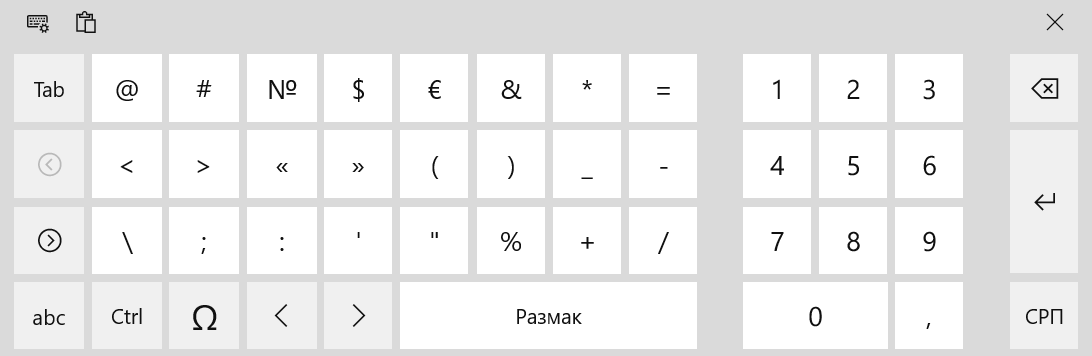
Just clarifying the Cyrillic @ problem – I have the Serbian Cyrillic language pack installed on my personal Windows 10 for some reason, and the soft keyboard does offer @ [cid:image001.png@01D9FB91.DFDCF5D0] From: UA-EAI <ua-eai-bounces@icann.org> On Behalf Of ????? ?????????? via UA-EAI Sent: Monday, September 25, 2023 4:31 PM To: Arnt Gulbrandsen <arnt.gulbrandsen@icann.org> Cc: ua-tech@icann.org; ua-eai@icann.org Subject: [EXTERNAL] Re: [UA-EAI] [UA-Tech] A request concerning entering domain names Dear Arnt, Thanks for dealing with that problem, which I was highlighting since the beginning of UASG. Armenian and Arabic, to the best of my knowledge, are with same "dot" problem, while Cyrillic (in any form) doesn't have "dot" but "at" problem: (regarding EAI) there's no @ in Cyrillic at all (speaking of Windows OS, while on Macs things may be different). Regards, Dušan 19. 9. 2023. 16:21, Arnt Gulbrandsen via UA-Tech <ua-tech@icann.org<mailto:ua-tech@icann.org>> је написао/ла: Hi, When I enter a domain name such as icann.org, I just press nine keys in sequence, i, c and so on. Five keys for icann, then one for the dot, then three for org. When a Chinese user enters a Chinese domain in a similarly simple way, the result may be 星巴克。商标, while the correct result would be 星巴克.商标 (note the different dots). Entering the correct domain requires entering 星巴克, changing keyboard layout to get latin letters, entering the ASCII dot, changing keyboard layout back, then entering 商标. Bothersome. You will not be surprised to learn that forgetting to switch layout is a common mistake. I’d like to know which other locales have a similar problem, and for that I want to ask a favour. There are many people here who use different keyboard input methods. If your keyboard input method has a similar problem, can you send me the dot and an example domain (which does not need to exist, something like example.yourtld would do)? Offlist please. That is to arnt.gulbrandsen@icann.org<mailto:arnt.gulbrandsen@icann.org>. If a keyboard method uses non-latin letters but includes the ASCII full stop, I’m interested in that too. Always heartening to know when something is not buggy. -- Arnt Gulbrandsen UA Technology Sr. Manager, ICANN +32 492 374706
participants (5)
-
 Arnt Gulbrandsen
 -
 Jiankang Yao
 -
 Jim DeLaHunt
 -
 Mark Svancarek (CELA)
 -
 Душан Стојичевић