More evidence of the decline of "memorable" domains

As I've said before, the greed and rent-seeking of the domain industry has been doing an excellent job driving both providers and consumers of Internet services to seek alternatives to "memorable" domain names. Every Google search and every Facebook corporate page gives people a more-useful way for people to get what they want from the net. One more recent manifestation of this phenomenon caught my eye. Ten years ago airlines started putting their web domains boldly on the side of their planes. But now we have this: [image: Azores-Airlines-Airbus-A321LR-e1562685732426.jpeg] It's on all their planes. and consumers know what to do when they see it. Use the QR code or search Azores Air. Who needs to know that it's a Portuguese airline with a .pt domain? Who needs to care? The FQDN is in small print while the other access methods predominate. This is where things are going, folks. Don't believe the hype. And don't pay the ransom. Almost everyone who defends the ruse has a vested interest in maintaining it. Evan Leibovitch, Toronto Canada @evanleibovitch / @el56


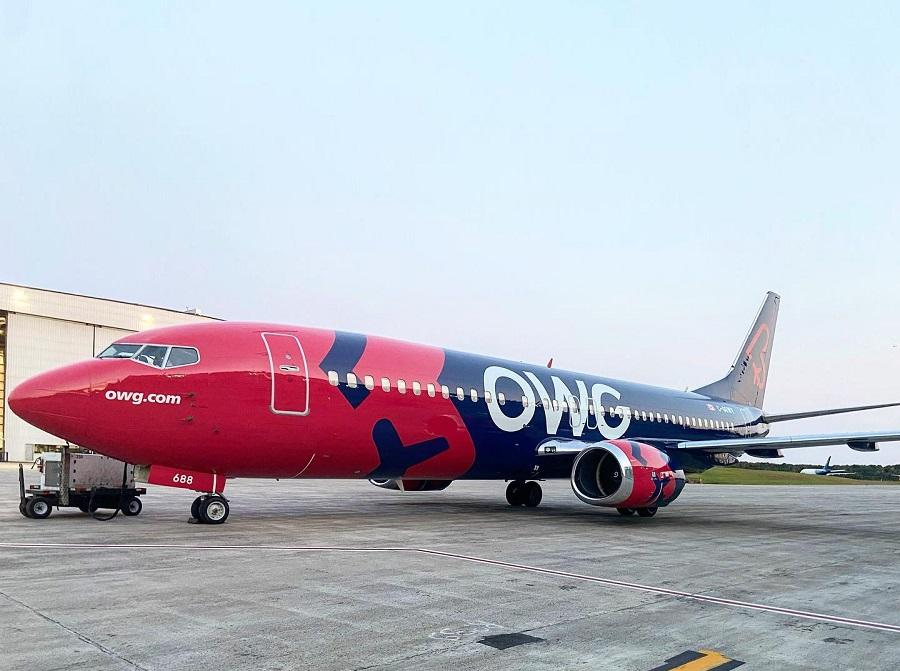
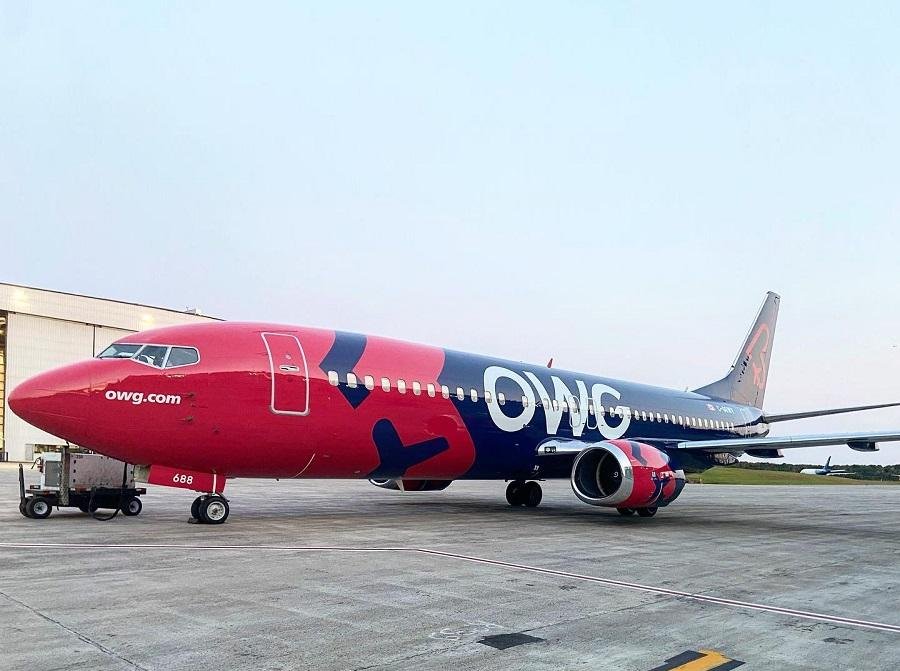
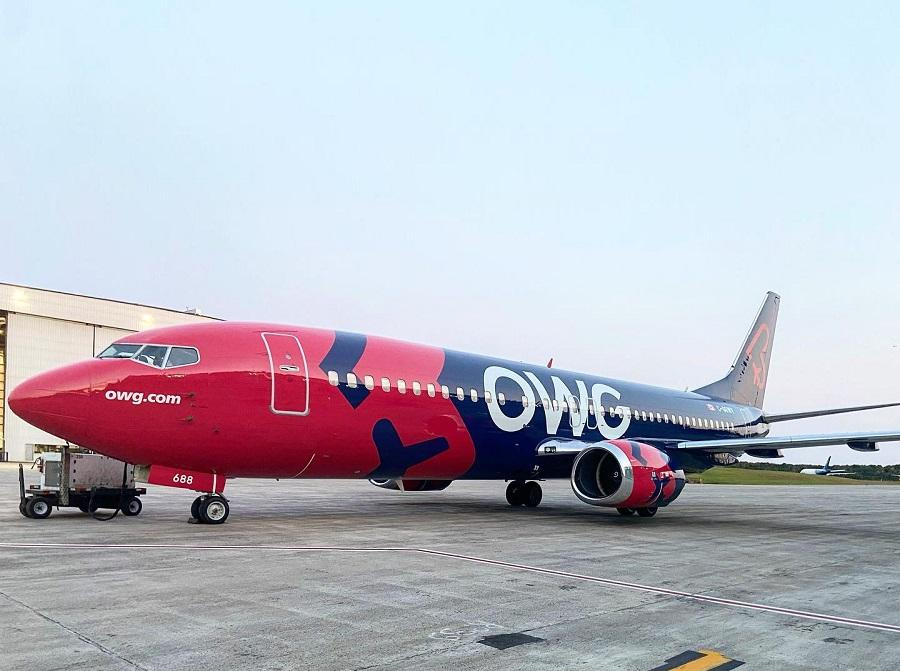
OWG is a new Canadian airline. Its first commercial flight was last month from your city of Toronto- https://www.flightglobal.com/networks/canadas-owg-launches-with-initial-flig... OWG.com branding is prominent on the fuselage. Who sold them the domain name? I did. [image: image.png] On Thu, Jan 28, 2021 at 12:01 PM Evan Leibovitch <evan@telly.org> wrote:
As I've said before, the greed and rent-seeking of the domain industry has been doing an excellent job driving both providers and consumers of Internet services to seek alternatives to "memorable" domain names. Every Google search and every Facebook corporate page gives people a more-useful way for people to get what they want from the net.
One more recent manifestation of this phenomenon caught my eye. Ten years ago airlines started putting their web domains boldly on the side of their planes. But now we have this:
[image: Azores-Airlines-Airbus-A321LR-e1562685732426.jpeg]
It's on all their planes. and consumers know what to do when they see it. Use the QR code or search Azores Air. Who needs to know that it's a Portuguese airline with a .pt domain? Who needs to care? The FQDN is in small print while the other access methods predominate. This is where things are going, folks. Don't believe the hype. And don't pay the ransom. Almost everyone who defends the ruse has a vested interest in maintaining it.
Evan Leibovitch, Toronto Canada @evanleibovitch / @el56 ------ NA-Discuss mailing list NA-Discuss@atlarge-lists.icann.org https://atlarge-lists.icann.org/mailman/listinfo/na-discuss
Visit the NARALO online at http://www.naralo.org ------ _______________________________________________ By submitting your personal data, you consent to the processing of your personal data for purposes of subscribing to this mailing list accordance with the ICANN Privacy Policy (https://www.icann.org/privacy/policy) and the website Terms of Service (https://www.icann.org/privacy/tos). You can visit the Mailman link above to change your membership status or configuration, including unsubscribing, setting digest-style delivery or disabling delivery altogether (e.g., for a vacation), and so on.


all, In doing a quick online search, I came across this old CircleId article that included, what appeared to be, a relevant quote (pasted below). In any case, this appeared to be a very brief article that barely scratches the surface. http://www.circleid.com/posts/speculation_and_investment_in_domain_names/ quoting the author: "Thus, buying and selling domain names are speculative investments that can create, destroy, or transfer value." In 2021, we are all aware of how Org's budget has expanded over the years (I believe now in excess of over US 100M), yet there appears to be a shortcoming in the collection of empirical data and market research on some of the most fundamental matters which fall under ICANN's public trust commitments. In this regard, I am reminded of Evan's previous comments on the essential role of the at-large community in both educating and informing gTLD policy development as being particularly pertinent to this discussion. For example, here are a few topics which I believe that progress could be made through the commissioning of (truly) independent study, research, and analysis: - From an economic perspective, what market failures or needs do domain names address (e.g. can short, concise identifiers, effectively improve communication, and within a certain context, reduce searching costs). On this basis, how should the gTLD space be optimally structured to help ensure that domain names are able to meet these market failures/needs. - How can the allocation of domain names harm public welfare and simultaneously impose significant social costs on Internet users and the consuming public. As the public steward of the DNS, what measures should ICANN be employing to address DNS abuse in legacy and new gTLDs. What combination of methods (e.g. consensus policies, contracts, market mechanisms, enforcement) can best address and mitigate these consumer harms? Hope helpful...cheers all. On Thu, Jan 28, 2021 at 12:17 PM Nat Cohen <ncohen@telepathy.com> wrote:
OWG is a new Canadian airline. Its first commercial flight was last month from your city of Toronto-
https://www.flightglobal.com/networks/canadas-owg-launches-with-initial-flig...
OWG.com branding is prominent on the fuselage. Who sold them the domain name? I did.
[image: image.png]
On Thu, Jan 28, 2021 at 12:01 PM Evan Leibovitch <evan@telly.org> wrote:
As I've said before, the greed and rent-seeking of the domain industry has been doing an excellent job driving both providers and consumers of Internet services to seek alternatives to "memorable" domain names. Every Google search and every Facebook corporate page gives people a more-useful way for people to get what they want from the net.
One more recent manifestation of this phenomenon caught my eye. Ten years ago airlines started putting their web domains boldly on the side of their planes. But now we have this:
[image: Azores-Airlines-Airbus-A321LR-e1562685732426.jpeg]
It's on all their planes. and consumers know what to do when they see it. Use the QR code or search Azores Air. Who needs to know that it's a Portuguese airline with a .pt domain? Who needs to care? The FQDN is in small print while the other access methods predominate. This is where things are going, folks. Don't believe the hype. And don't pay the ransom. Almost everyone who defends the ruse has a vested interest in maintaining it.
Evan Leibovitch, Toronto Canada @evanleibovitch / @el56 ------ NA-Discuss mailing list NA-Discuss@atlarge-lists.icann.org https://atlarge-lists.icann.org/mailman/listinfo/na-discuss
Visit the NARALO online at http://www.naralo.org ------ _______________________________________________ By submitting your personal data, you consent to the processing of your personal data for purposes of subscribing to this mailing list accordance with the ICANN Privacy Policy (https://www.icann.org/privacy/policy) and the website Terms of Service (https://www.icann.org/privacy/tos). You can visit the Mailman link above to change your membership status or configuration, including unsubscribing, setting digest-style delivery or disabling delivery altogether (e.g., for a vacation), and so on.
------ NA-Discuss mailing list NA-Discuss@atlarge-lists.icann.org https://atlarge-lists.icann.org/mailman/listinfo/na-discuss
Visit the NARALO online at http://www.naralo.org ------ _______________________________________________ By submitting your personal data, you consent to the processing of your personal data for purposes of subscribing to this mailing list accordance with the ICANN Privacy Policy (https://www.icann.org/privacy/policy) and the website Terms of Service (https://www.icann.org/privacy/tos). You can visit the Mailman link above to change your membership status or configuration, including unsubscribing, setting digest-style delivery or disabling delivery altogether (e.g., for a vacation), and so on.

Claudio, Could you clarify your point? Domain names have already been allocated. Domain names serve as online brands and help businesses connect with their customers/clients. Imagine the impact on Twitter if it had continued using its original domain name twttr.com and had not acquired twitter.com from the bird lover who had originally registered it, or if some other company had built a business on the Twitter.com domain name. Some may not understand the value of the benefits that businesses receive from using meaningful domain names, but that does not deter businesses from making sensible investments in acquiring those domain names. Abusive use of domain names is already addressed through the UDRP and the URS in addition to national laws. ICANN just concluded a four-year intensive review of the URS and is about to embark on an intensive review of the UDRP. The most obvious way that ICANN's allocation of domain names harms the public welfare is the nearly billion dollar excess cost imposed on all .com registrants due to ICANN's failure to put the registry service contract for managing .com out for bid - as other ccTLD national authorities do as a matter of minimally competent administration for the public benefit. Regards, Nat Cohen On Thu, Jan 28, 2021 at 2:30 PM claudio di gangi <ipcdigangi@gmail.com> wrote:
all,
In doing a quick online search, I came across this old CircleId article that included, what appeared to be, a relevant quote (pasted below). In any case, this appeared to be a very brief article that barely scratches the surface. http://www.circleid.com/posts/speculation_and_investment_in_domain_names/
quoting the author: "Thus, buying and selling domain names are speculative investments that can create, destroy, or transfer value."
In 2021, we are all aware of how Org's budget has expanded over the years (I believe now in excess of over US 100M), yet there appears to be a shortcoming in the collection of empirical data and market research on some of the most fundamental matters which fall under ICANN's public trust commitments. In this regard, I am reminded of Evan's previous comments on the essential role of the at-large community in both educating and informing gTLD policy development as being particularly pertinent to this discussion. For example, here are a few topics which I believe that progress could be made through the commissioning of (truly) independent study, research, and analysis:
- From an economic perspective, what market failures or needs do domain names address (e.g. can short, concise identifiers, effectively improve communication, and within a certain context, reduce searching costs). On this basis, how should the gTLD space be optimally structured to help ensure that domain names are able to meet these market failures/needs.
- How can the allocation of domain names harm public welfare and simultaneously impose significant social costs on Internet users and the consuming public. As the public steward of the DNS, what measures should ICANN be employing to address DNS abuse in legacy and new gTLDs. What combination of methods (e.g. consensus policies, contracts, market mechanisms, enforcement) can best address and mitigate these consumer harms?
Hope helpful...cheers all.
On Thu, Jan 28, 2021 at 12:17 PM Nat Cohen <ncohen@telepathy.com> wrote:
OWG is a new Canadian airline. Its first commercial flight was last month from your city of Toronto-
https://www.flightglobal.com/networks/canadas-owg-launches-with-initial-flig...
OWG.com branding is prominent on the fuselage. Who sold them the domain name? I did.
[image: image.png]
On Thu, Jan 28, 2021 at 12:01 PM Evan Leibovitch <evan@telly.org> wrote:
As I've said before, the greed and rent-seeking of the domain industry has been doing an excellent job driving both providers and consumers of Internet services to seek alternatives to "memorable" domain names. Every Google search and every Facebook corporate page gives people a more-useful way for people to get what they want from the net.
One more recent manifestation of this phenomenon caught my eye. Ten years ago airlines started putting their web domains boldly on the side of their planes. But now we have this:
[image: Azores-Airlines-Airbus-A321LR-e1562685732426.jpeg]
It's on all their planes. and consumers know what to do when they see it. Use the QR code or search Azores Air. Who needs to know that it's a Portuguese airline with a .pt domain? Who needs to care? The FQDN is in small print while the other access methods predominate. This is where things are going, folks. Don't believe the hype. And don't pay the ransom. Almost everyone who defends the ruse has a vested interest in maintaining it.
Evan Leibovitch, Toronto Canada @evanleibovitch / @el56 ------ NA-Discuss mailing list NA-Discuss@atlarge-lists.icann.org https://atlarge-lists.icann.org/mailman/listinfo/na-discuss
Visit the NARALO online at http://www.naralo.org ------ _______________________________________________ By submitting your personal data, you consent to the processing of your personal data for purposes of subscribing to this mailing list accordance with the ICANN Privacy Policy (https://www.icann.org/privacy/policy) and the website Terms of Service (https://www.icann.org/privacy/tos). You can visit the Mailman link above to change your membership status or configuration, including unsubscribing, setting digest-style delivery or disabling delivery altogether (e.g., for a vacation), and so on.
------ NA-Discuss mailing list NA-Discuss@atlarge-lists.icann.org https://atlarge-lists.icann.org/mailman/listinfo/na-discuss
Visit the NARALO online at http://www.naralo.org ------ _______________________________________________ By submitting your personal data, you consent to the processing of your personal data for purposes of subscribing to this mailing list accordance with the ICANN Privacy Policy (https://www.icann.org/privacy/policy) and the website Terms of Service (https://www.icann.org/privacy/tos). You can visit the Mailman link above to change your membership status or configuration, including unsubscribing, setting digest-style delivery or disabling delivery altogether (e.g., for a vacation), and so on.

Abusive use of domain names is already addressed through the UDRP and the URS in addition to national laws. ICANN just concluded a four-year intensive review of the URS and is about to embark on an intensive review of the UDRP.
It's not only myopic, but utterly clueless of the historical interests and activities of At-Large in this realm, to assert that all ICANN issues of domain abuse are within the scope of the URS and UDRP. - Evan
More grist for the mill -- why and how domaining hurts small business and entrepreneurs, and how it extracts value rather than adds: http://www.circleid.com/posts/20210210-now-we-know-why-its-hard-to-get-a-com... All you domain speculators who fancy yourselves marketing experts and are camped out in NARALO because, I would guess, no other constituency will have you .... your turn. I see that some have already posted lame rebuttals on CircleID, read them and have a chuckle. (It's still noteworthy that nobody I know in ICANN-land defends the practice except those with direct financial interest in it.) (And thank you to the kind NARALO member who found the article, figuring that I might have more fun posting it here than they would. You're probably right.) Disclosure: I have never accepted money from AT&T or any other telco or ISP for that matter. My shitty mobile provider won't even give me a decent discount, but the others are no better. I did win a T-shirt a few years ago from SiriusXM, does that count? Cheers, Evan Leibovitch, Toronto Canada @evanleibovitch / @el56

Hi Evan, Thanks for the information. Just curious, do you think the Ticketmaster/Scalper relationship (primary/secondary market) for tickets is analogous to domain name markets? Cheers, David On Thu, Feb 11, 2021 at 12:36 AM Evan Leibovitch <evan@telly.org> wrote:
More grist for the mill -- why and how domaining hurts small business and entrepreneurs, and how it extracts value rather than adds: http://www.circleid.com/posts/20210210-now-we-know-why-its-hard-to-get-a-com...
All you domain speculators who fancy yourselves marketing experts and are camped out in NARALO because, I would guess, no other constituency will have you .... your turn. I see that some have already posted lame rebuttals on CircleID, read them and have a chuckle. (It's still noteworthy that nobody I know in ICANN-land defends the practice except those with direct financial interest in it.)
(And thank you to the kind NARALO member who found the article, figuring that I might have more fun posting it here than they would. You're probably right.)
Disclosure: I have never accepted money from AT&T or any other telco or ISP for that matter. My shitty mobile provider won't even give me a decent discount, but the others are no better. I did win a T-shirt a few years ago from SiriusXM, does that count? Cheers,
Evan Leibovitch, Toronto Canada @evanleibovitch / @el56
------ NA-Discuss mailing list NA-Discuss@atlarge-lists.icann.org https://atlarge-lists.icann.org/mailman/listinfo/na-discuss
Visit the NARALO online at http://www.naralo.org ------ _______________________________________________ By submitting your personal data, you consent to the processing of your personal data for purposes of subscribing to this mailing list accordance with the ICANN Privacy Policy (https://www.icann.org/privacy/policy) and the website Terms of Service (https://www.icann.org/privacy/tos). You can visit the Mailman link above to change your membership status or configuration, including unsubscribing, setting digest-style delivery or disabling delivery altogether (e.g., for a vacation), and so on.
Hi David, If I may chime in- A scalper buys a ticket from a pool of tickets that are limited in number and that have a limited useful life - usually a couple of hours on a particular date. The ticket provides access to, and a source of funding to support the production of, exclusive content provided by a presenter who charges a fee to experience that content - be it a concert, a performance, a race, a fight, etc. In contrast, the pool of domain names are nearly infinite in number, the useful life is indefinite, and the domain names are not sold by the owners of exclusive content as the exclusive means to access that content. Domain names are an alias for an online IP address. They are sold by a registry provider whose job it is to match certain contact information and name servers with a particular domain name. The character of domain names is much more similar to physical real estate which can be bought and sold many times in the resale market. The role of a domain name registry is akin to that of a land registry not a concert promoter. In the past couple of weeks, I acquired lentes.com (Spanish for glasses) from the registrant who lives in Mexico and lentesdesol.com (sunglasses in Spanish) from the registrant who lives in Colombia. They both no longer had a need for those domain names and valued the cash that I offered them more highly than continuing to own those domain names. I hope to sell these domain names for more than I paid for them. In what way is this free functioning of the secondary market a problem or akin to ticket scalping? Regards, Nat On Thu, Feb 11, 2021 at 8:10 AM David Mackey <mackey361@gmail.com> wrote:
Hi Evan,
Thanks for the information.
Just curious, do you think the Ticketmaster/Scalper relationship (primary/secondary market) for tickets is analogous to domain name markets?
Cheers, David
On Thu, Feb 11, 2021 at 12:36 AM Evan Leibovitch <evan@telly.org> wrote:
More grist for the mill -- why and how domaining hurts small business and entrepreneurs, and how it extracts value rather than adds: http://www.circleid.com/posts/20210210-now-we-know-why-its-hard-to-get-a-com...
All you domain speculators who fancy yourselves marketing experts and are camped out in NARALO because, I would guess, no other constituency will have you .... your turn. I see that some have already posted lame rebuttals on CircleID, read them and have a chuckle. (It's still noteworthy that nobody I know in ICANN-land defends the practice except those with direct financial interest in it.)
(And thank you to the kind NARALO member who found the article, figuring that I might have more fun posting it here than they would. You're probably right.)
Disclosure: I have never accepted money from AT&T or any other telco or ISP for that matter. My shitty mobile provider won't even give me a decent discount, but the others are no better. I did win a T-shirt a few years ago from SiriusXM, does that count? Cheers,
Evan Leibovitch, Toronto Canada @evanleibovitch / @el56
------ NA-Discuss mailing list NA-Discuss@atlarge-lists.icann.org https://atlarge-lists.icann.org/mailman/listinfo/na-discuss
Visit the NARALO online at http://www.naralo.org ------ _______________________________________________ By submitting your personal data, you consent to the processing of your personal data for purposes of subscribing to this mailing list accordance with the ICANN Privacy Policy (https://www.icann.org/privacy/policy) and the website Terms of Service (https://www.icann.org/privacy/tos). You can visit the Mailman link above to change your membership status or configuration, including unsubscribing, setting digest-style delivery or disabling delivery altogether (e.g., for a vacation), and so on.
------ NA-Discuss mailing list NA-Discuss@atlarge-lists.icann.org https://atlarge-lists.icann.org/mailman/listinfo/na-discuss
Visit the NARALO online at http://www.naralo.org ------ _______________________________________________ By submitting your personal data, you consent to the processing of your personal data for purposes of subscribing to this mailing list accordance with the ICANN Privacy Policy (https://www.icann.org/privacy/policy) and the website Terms of Service (https://www.icann.org/privacy/tos). You can visit the Mailman link above to change your membership status or configuration, including unsubscribing, setting digest-style delivery or disabling delivery altogether (e.g., for a vacation), and so on.
Hi Nat, Thanks for the information too. I'm not sure your comparison between tickets and domain names satisfied my curiosity. You state ... "In contrast, the pool of domain names are nearly infinite in number, the useful life is indefinite" Yes, I agree that the pool of domain names is nearly infinite, however, the pool of human relevant domain names is smaller than infinite. The value of a domain name is connected to the relevancy it has to humans (aka Brand Marketing). The primary/secondary domain name market falls within human relevant domain names. The domain name primary/secondary market is not infinite. The other point I'm not sure about relates to the "limited useful life" of a domain name vs. a ticket. Tickets are used to capture value for a real life event. Domain names are human constructs used to connect humans with computers. The nature of a ticket is different from the nature of a domain name with respect to the determination of "useful life". The "useful life" of a domain name is governed by policy. Policies can be changed. Cheers! David On Thu, Feb 11, 2021 at 9:20 AM Nat Cohen <ncohen@telepathy.com> wrote:
Hi David,
If I may chime in-
A scalper buys a ticket from a pool of tickets that are limited in number and that have a limited useful life - usually a couple of hours on a particular date. The ticket provides access to, and a source of funding to support the production of, exclusive content provided by a presenter who charges a fee to experience that content - be it a concert, a performance, a race, a fight, etc.
In contrast, the pool of domain names are nearly infinite in number, the useful life is indefinite, and the domain names are not sold by the owners of exclusive content as the exclusive means to access that content. Domain names are an alias for an online IP address. They are sold by a registry provider whose job it is to match certain contact information and name servers with a particular domain name. The character of domain names is much more similar to physical real estate which can be bought and sold many times in the resale market. The role of a domain name registry is akin to that of a land registry not a concert promoter.
In the past couple of weeks, I acquired lentes.com (Spanish for glasses) from the registrant who lives in Mexico and lentesdesol.com (sunglasses in Spanish) from the registrant who lives in Colombia. They both no longer had a need for those domain names and valued the cash that I offered them more highly than continuing to own those domain names. I hope to sell these domain names for more than I paid for them. In what way is this free functioning of the secondary market a problem or akin to ticket scalping?
Regards,
Nat
On Thu, Feb 11, 2021 at 8:10 AM David Mackey <mackey361@gmail.com> wrote:
Hi Evan,
Thanks for the information.
Just curious, do you think the Ticketmaster/Scalper relationship (primary/secondary market) for tickets is analogous to domain name markets?
Cheers, David
On Thu, Feb 11, 2021 at 12:36 AM Evan Leibovitch <evan@telly.org> wrote:
More grist for the mill -- why and how domaining hurts small business and entrepreneurs, and how it extracts value rather than adds: http://www.circleid.com/posts/20210210-now-we-know-why-its-hard-to-get-a-com...
All you domain speculators who fancy yourselves marketing experts and are camped out in NARALO because, I would guess, no other constituency will have you .... your turn. I see that some have already posted lame rebuttals on CircleID, read them and have a chuckle. (It's still noteworthy that nobody I know in ICANN-land defends the practice except those with direct financial interest in it.)
(And thank you to the kind NARALO member who found the article, figuring that I might have more fun posting it here than they would. You're probably right.)
Disclosure: I have never accepted money from AT&T or any other telco or ISP for that matter. My shitty mobile provider won't even give me a decent discount, but the others are no better. I did win a T-shirt a few years ago from SiriusXM, does that count? Cheers,
Evan Leibovitch, Toronto Canada @evanleibovitch / @el56
------ NA-Discuss mailing list NA-Discuss@atlarge-lists.icann.org https://atlarge-lists.icann.org/mailman/listinfo/na-discuss
Visit the NARALO online at http://www.naralo.org ------ _______________________________________________ By submitting your personal data, you consent to the processing of your personal data for purposes of subscribing to this mailing list accordance with the ICANN Privacy Policy (https://www.icann.org/privacy/policy) and the website Terms of Service (https://www.icann.org/privacy/tos). You can visit the Mailman link above to change your membership status or configuration, including unsubscribing, setting digest-style delivery or disabling delivery altogether (e.g., for a vacation), and so on.
------ NA-Discuss mailing list NA-Discuss@atlarge-lists.icann.org https://atlarge-lists.icann.org/mailman/listinfo/na-discuss
Visit the NARALO online at http://www.naralo.org ------ _______________________________________________ By submitting your personal data, you consent to the processing of your personal data for purposes of subscribing to this mailing list accordance with the ICANN Privacy Policy (https://www.icann.org/privacy/policy) and the website Terms of Service (https://www.icann.org/privacy/tos). You can visit the Mailman link above to change your membership status or configuration, including unsubscribing, setting digest-style delivery or disabling delivery altogether (e.g., for a vacation), and so on.

Since domain names are not actually “owned” but require constant renewal, isn’t the situation more akin to charging a premium to someone taking over a lease? All analogies are flawed, almost by definition, but this is the closest I’ve been able to come to one that fits. From: NA-Discuss <na-discuss-bounces@atlarge-lists.icann.org> on behalf of David Mackey <mackey361@gmail.com> Date: Thursday, February 11, 2021 at 7:54 AM To: Nat Cohen <ncohen@telepathy.com> Cc: NARALO Discussion List <na-discuss@atlarge-lists.icann.org> Subject: Re: [NA-Discuss] The societal harm of domaining, episode 413 Hi Nat, Thanks for the information too. I'm not sure your comparison between tickets and domain names satisfied my curiosity. You state ... "In contrast, the pool of domain names are nearly infinite in number, the useful life is indefinite" Yes, I agree that the pool of domain names is nearly infinite, however, the pool of human relevant domain names is smaller than infinite. The value of a domain name is connected to the relevancy it has to humans (aka Brand Marketing). The primary/secondary domain name market falls within human relevant domain names. The domain name primary/secondary market is not infinite. The other point I'm not sure about relates to the "limited useful life" of a domain name vs. a ticket. Tickets are used to capture value for a real life event. Domain names are human constructs used to connect humans with computers. The nature of a ticket is different from the nature of a domain name with respect to the determination of "useful life". The "useful life" of a domain name is governed by policy. Policies can be changed. Cheers! David On Thu, Feb 11, 2021 at 9:20 AM Nat Cohen <ncohen@telepathy.com<mailto:ncohen@telepathy.com>> wrote: Hi David, If I may chime in- A scalper buys a ticket from a pool of tickets that are limited in number and that have a limited useful life - usually a couple of hours on a particular date. The ticket provides access to, and a source of funding to support the production of, exclusive content provided by a presenter who charges a fee to experience that content - be it a concert, a performance, a race, a fight, etc. In contrast, the pool of domain names are nearly infinite in number, the useful life is indefinite, and the domain names are not sold by the owners of exclusive content as the exclusive means to access that content. Domain names are an alias for an online IP address. They are sold by a registry provider whose job it is to match certain contact information and name servers with a particular domain name. The character of domain names is much more similar to physical real estate which can be bought and sold many times in the resale market. The role of a domain name registry is akin to that of a land registry not a concert promoter. In the past couple of weeks, I acquired lentes.com<http://lentes.com> (Spanish for glasses) from the registrant who lives in Mexico and lentesdesol.com<http://lentesdesol.com> (sunglasses in Spanish) from the registrant who lives in Colombia. They both no longer had a need for those domain names and valued the cash that I offered them more highly than continuing to own those domain names. I hope to sell these domain names for more than I paid for them. In what way is this free functioning of the secondary market a problem or akin to ticket scalping? Regards, Nat On Thu, Feb 11, 2021 at 8:10 AM David Mackey <mackey361@gmail.com<mailto:mackey361@gmail.com>> wrote: Hi Evan, Thanks for the information. Just curious, do you think the Ticketmaster/Scalper relationship (primary/secondary market) for tickets is analogous to domain name markets? Cheers, David On Thu, Feb 11, 2021 at 12:36 AM Evan Leibovitch <evan@telly.org<mailto:evan@telly.org>> wrote: More grist for the mill -- why and how domaining hurts small business and entrepreneurs, and how it extracts value rather than adds: http://www.circleid.com/posts/20210210-now-we-know-why-its-hard-to-get-a-com... All you domain speculators who fancy yourselves marketing experts and are camped out in NARALO because, I would guess, no other constituency will have you .... your turn. I see that some have already posted lame rebuttals on CircleID, read them and have a chuckle. (It's still noteworthy that nobody I know in ICANN-land defends the practice except those with direct financial interest in it.) (And thank you to the kind NARALO member who found the article, figuring that I might have more fun posting it here than they would. You're probably right.) Disclosure: I have never accepted money from AT&T or any other telco or ISP for that matter. My shitty mobile provider won't even give me a decent discount, but the others are no better. I did win a T-shirt a few years ago from SiriusXM, does that count? Cheers, Evan Leibovitch, Toronto Canada @evanleibovitch / @el56 ------ NA-Discuss mailing list NA-Discuss@atlarge-lists.icann.org<mailto:NA-Discuss@atlarge-lists.icann.org> https://atlarge-lists.icann.org/mailman/listinfo/na-discuss Visit the NARALO online at http://www.naralo.org ------ _______________________________________________ By submitting your personal data, you consent to the processing of your personal data for purposes of subscribing to this mailing list accordance with the ICANN Privacy Policy (https://www.icann.org/privacy/policy) and the website Terms of Service (https://www.icann.org/privacy/tos). You can visit the Mailman link above to change your membership status or configuration, including unsubscribing, setting digest-style delivery or disabling delivery altogether (e.g., for a vacation), and so on. ------ NA-Discuss mailing list NA-Discuss@atlarge-lists.icann.org<mailto:NA-Discuss@atlarge-lists.icann.org> https://atlarge-lists.icann.org/mailman/listinfo/na-discuss Visit the NARALO online at http://www.naralo.org ------ _______________________________________________ By submitting your personal data, you consent to the processing of your personal data for purposes of subscribing to this mailing list accordance with the ICANN Privacy Policy (https://www.icann.org/privacy/policy) and the website Terms of Service (https://www.icann.org/privacy/tos). You can visit the Mailman link above to change your membership status or configuration, including unsubscribing, setting digest-style delivery or disabling delivery altogether (e.g., for a vacation), and so on.
As best as I understand it, in the U.S. in some courts (circuits) domain names are treated as a property right and in others as a contract right. Perhaps one day the Supreme Court will be called upon to resolve the conflicting interpretation. A Google search brings up various articles on the topic- http://www.circleid.com/posts/20180628_domain_names_considered_contracts_for... http://www.circleid.com/posts/20170202_are_domain_names_contract_of_services... https://www.emerald.com/insight/content/doi/10.1108/14770020910959628/full/h... https://jipel.law.nyu.edu/vol-3-no-1-1-abbott/ On Thu, Feb 11, 2021 at 11:19 AM Jonathan Zuck <JZuck@innovatorsnetwork.org> wrote:
Since domain names are not actually “owned” but require constant renewal, isn’t the situation more akin to charging a premium to someone taking over a lease? All analogies are flawed, almost by definition, but this is the closest I’ve been able to come to one that fits.
*From: *NA-Discuss <na-discuss-bounces@atlarge-lists.icann.org> on behalf of David Mackey <mackey361@gmail.com> *Date: *Thursday, February 11, 2021 at 7:54 AM *To: *Nat Cohen <ncohen@telepathy.com> *Cc: *NARALO Discussion List <na-discuss@atlarge-lists.icann.org> *Subject: *Re: [NA-Discuss] The societal harm of domaining, episode 413
Hi Nat,
Thanks for the information too.
I'm not sure your comparison between tickets and domain names satisfied my curiosity.
You state ... "In contrast, the pool of domain names are nearly infinite in number, the useful life is indefinite"
Yes, I agree that the pool of domain names is nearly infinite, however, the pool of human relevant domain names is smaller than infinite. The value of a domain name is connected to the relevancy it has to humans (aka Brand Marketing). The primary/secondary domain name market falls within human relevant domain names. The domain name primary/secondary market is not infinite.
The other point I'm not sure about relates to the "limited useful life" of a domain name vs. a ticket. Tickets are used to capture value for a real life event. Domain names are human constructs used to connect humans with computers. The nature of a ticket is different from the nature of a domain name with respect to the determination of "useful life". The "useful life" of a domain name is governed by policy. Policies can be changed.
Cheers!
David
On Thu, Feb 11, 2021 at 9:20 AM Nat Cohen <ncohen@telepathy.com> wrote:
Hi David,
If I may chime in-
A scalper buys a ticket from a pool of tickets that are limited in number and that have a limited useful life - usually a couple of hours on a particular date. The ticket provides access to, and a source of funding to support the production of, exclusive content provided by a presenter who charges a fee to experience that content - be it a concert, a performance, a race, a fight, etc.
In contrast, the pool of domain names are nearly infinite in number, the useful life is indefinite, and the domain names are not sold by the owners of exclusive content as the exclusive means to access that content. Domain names are an alias for an online IP address. They are sold by a registry provider whose job it is to match certain contact information and name servers with a particular domain name. The character of domain names is much more similar to physical real estate which can be bought and sold many times in the resale market. The role of a domain name registry is akin to that of a land registry not a concert promoter.
In the past couple of weeks, I acquired lentes.com (Spanish for glasses) from the registrant who lives in Mexico and lentesdesol.com (sunglasses in Spanish) from the registrant who lives in Colombia. They both no longer had a need for those domain names and valued the cash that I offered them more highly than continuing to own those domain names. I hope to sell these domain names for more than I paid for them. In what way is this free functioning of the secondary market a problem or akin to ticket scalping?
Regards,
Nat
On Thu, Feb 11, 2021 at 8:10 AM David Mackey <mackey361@gmail.com> wrote:
Hi Evan,
Thanks for the information.
Just curious, do you think the Ticketmaster/Scalper relationship (primary/secondary market) for tickets is analogous to domain name markets?
Cheers,
David
On Thu, Feb 11, 2021 at 12:36 AM Evan Leibovitch <evan@telly.org> wrote:
More grist for the mill -- why and how domaining hurts small business and entrepreneurs, and how it extracts value rather than adds: http://www.circleid.com/posts/20210210-now-we-know-why-its-hard-to-get-a-com...
All you domain speculators who fancy yourselves marketing experts and are camped out in NARALO because, I would guess, no other constituency will have you .... your turn. I see that some have already posted lame rebuttals on CircleID, read them and have a chuckle. (It's still noteworthy that nobody I know in ICANN-land defends the practice except those with direct financial interest in it.)
(And thank you to the kind NARALO member who found the article, figuring that I might have more fun posting it here than they would. You're probably right.)
Disclosure: I have never accepted money from AT&T or any other telco or ISP for that matter. My shitty mobile provider won't even give me a decent discount, but the others are no better. I did win a T-shirt a few years ago from SiriusXM, does that count?
Cheers,
Evan Leibovitch, Toronto Canada
@evanleibovitch / @el56
------ NA-Discuss mailing list NA-Discuss@atlarge-lists.icann.org https://atlarge-lists.icann.org/mailman/listinfo/na-discuss
Visit the NARALO online at http://www.naralo.org ------ _______________________________________________ By submitting your personal data, you consent to the processing of your personal data for purposes of subscribing to this mailing list accordance with the ICANN Privacy Policy (https://www.icann.org/privacy/policy) and the website Terms of Service (https://www.icann.org/privacy/tos). You can visit the Mailman link above to change your membership status or configuration, including unsubscribing, setting digest-style delivery or disabling delivery altogether (e.g., for a vacation), and so on.
------ NA-Discuss mailing list NA-Discuss@atlarge-lists.icann.org https://atlarge-lists.icann.org/mailman/listinfo/na-discuss
Visit the NARALO online at http://www.naralo.org ------ _______________________________________________ By submitting your personal data, you consent to the processing of your personal data for purposes of subscribing to this mailing list accordance with the ICANN Privacy Policy (https://www.icann.org/privacy/policy) and the website Terms of Service (https://www.icann.org/privacy/tos). You can visit the Mailman link above to change your membership status or configuration, including unsubscribing, setting digest-style delivery or disabling delivery altogether (e.g., for a vacation), and so on.
I’m no lawyer nor do I pretend to be one (on this topic!). It’s hard to imagine it as a property right, with all the ways you can lose it. That said, you can lose real estate through criminal activity and failure to pay property taxes so I could I could shoehorn that interpretation as well. I feel as though we will have failed as a community if this goes before the Supreme Court but perhaps that’s the wrong way of looking at it. Thanks for the links Nat. From: Nat Cohen <ncohen@telepathy.com> Date: Thursday, February 11, 2021 at 8:43 AM To: Jonathan Zuck <JZuck@innovatorsnetwork.org> Cc: David Mackey <mackey361@gmail.com>, NARALO Discussion List <na-discuss@atlarge-lists.icann.org> Subject: Re: [NA-Discuss] The societal harm of domaining, episode 413 As best as I understand it, in the U.S. in some courts (circuits) domain names are treated as a property right and in others as a contract right. Perhaps one day the Supreme Court will be called upon to resolve the conflicting interpretation. A Google search brings up various articles on the topic- http://www.circleid.com/posts/20180628_domain_names_considered_contracts_for... http://www.circleid.com/posts/20170202_are_domain_names_contract_of_services... https://www.emerald.com/insight/content/doi/10.1108/14770020910959628/full/h... https://jipel.law.nyu.edu/vol-3-no-1-1-abbott/ On Thu, Feb 11, 2021 at 11:19 AM Jonathan Zuck <JZuck@innovatorsnetwork.org<mailto:JZuck@innovatorsnetwork.org>> wrote: Since domain names are not actually “owned” but require constant renewal, isn’t the situation more akin to charging a premium to someone taking over a lease? All analogies are flawed, almost by definition, but this is the closest I’ve been able to come to one that fits. From: NA-Discuss <na-discuss-bounces@atlarge-lists.icann.org<mailto:na-discuss-bounces@atlarge-lists.icann.org>> on behalf of David Mackey <mackey361@gmail.com<mailto:mackey361@gmail.com>> Date: Thursday, February 11, 2021 at 7:54 AM To: Nat Cohen <ncohen@telepathy.com<mailto:ncohen@telepathy.com>> Cc: NARALO Discussion List <na-discuss@atlarge-lists.icann.org<mailto:na-discuss@atlarge-lists.icann.org>> Subject: Re: [NA-Discuss] The societal harm of domaining, episode 413 Hi Nat, Thanks for the information too. I'm not sure your comparison between tickets and domain names satisfied my curiosity. You state ... "In contrast, the pool of domain names are nearly infinite in number, the useful life is indefinite" Yes, I agree that the pool of domain names is nearly infinite, however, the pool of human relevant domain names is smaller than infinite. The value of a domain name is connected to the relevancy it has to humans (aka Brand Marketing). The primary/secondary domain name market falls within human relevant domain names. The domain name primary/secondary market is not infinite. The other point I'm not sure about relates to the "limited useful life" of a domain name vs. a ticket. Tickets are used to capture value for a real life event. Domain names are human constructs used to connect humans with computers. The nature of a ticket is different from the nature of a domain name with respect to the determination of "useful life". The "useful life" of a domain name is governed by policy. Policies can be changed. Cheers! David On Thu, Feb 11, 2021 at 9:20 AM Nat Cohen <ncohen@telepathy.com<mailto:ncohen@telepathy.com>> wrote: Hi David, If I may chime in- A scalper buys a ticket from a pool of tickets that are limited in number and that have a limited useful life - usually a couple of hours on a particular date. The ticket provides access to, and a source of funding to support the production of, exclusive content provided by a presenter who charges a fee to experience that content - be it a concert, a performance, a race, a fight, etc. In contrast, the pool of domain names are nearly infinite in number, the useful life is indefinite, and the domain names are not sold by the owners of exclusive content as the exclusive means to access that content. Domain names are an alias for an online IP address. They are sold by a registry provider whose job it is to match certain contact information and name servers with a particular domain name. The character of domain names is much more similar to physical real estate which can be bought and sold many times in the resale market. The role of a domain name registry is akin to that of a land registry not a concert promoter. In the past couple of weeks, I acquired lentes.com<http://lentes.com> (Spanish for glasses) from the registrant who lives in Mexico and lentesdesol.com<http://lentesdesol.com> (sunglasses in Spanish) from the registrant who lives in Colombia. They both no longer had a need for those domain names and valued the cash that I offered them more highly than continuing to own those domain names. I hope to sell these domain names for more than I paid for them. In what way is this free functioning of the secondary market a problem or akin to ticket scalping? Regards, Nat On Thu, Feb 11, 2021 at 8:10 AM David Mackey <mackey361@gmail.com<mailto:mackey361@gmail.com>> wrote: Hi Evan, Thanks for the information. Just curious, do you think the Ticketmaster/Scalper relationship (primary/secondary market) for tickets is analogous to domain name markets? Cheers, David On Thu, Feb 11, 2021 at 12:36 AM Evan Leibovitch <evan@telly.org<mailto:evan@telly.org>> wrote: More grist for the mill -- why and how domaining hurts small business and entrepreneurs, and how it extracts value rather than adds: http://www.circleid.com/posts/20210210-now-we-know-why-its-hard-to-get-a-com... All you domain speculators who fancy yourselves marketing experts and are camped out in NARALO because, I would guess, no other constituency will have you .... your turn. I see that some have already posted lame rebuttals on CircleID, read them and have a chuckle. (It's still noteworthy that nobody I know in ICANN-land defends the practice except those with direct financial interest in it.) (And thank you to the kind NARALO member who found the article, figuring that I might have more fun posting it here than they would. You're probably right.) Disclosure: I have never accepted money from AT&T or any other telco or ISP for that matter. My shitty mobile provider won't even give me a decent discount, but the others are no better. I did win a T-shirt a few years ago from SiriusXM, does that count? Cheers, Evan Leibovitch, Toronto Canada @evanleibovitch / @el56 ------ NA-Discuss mailing list NA-Discuss@atlarge-lists.icann.org<mailto:NA-Discuss@atlarge-lists.icann.org> https://atlarge-lists.icann.org/mailman/listinfo/na-discuss Visit the NARALO online at http://www.naralo.org ------ _______________________________________________ By submitting your personal data, you consent to the processing of your personal data for purposes of subscribing to this mailing list accordance with the ICANN Privacy Policy (https://www.icann.org/privacy/policy) and the website Terms of Service (https://www.icann.org/privacy/tos). You can visit the Mailman link above to change your membership status or configuration, including unsubscribing, setting digest-style delivery or disabling delivery altogether (e.g., for a vacation), and so on. ------ NA-Discuss mailing list NA-Discuss@atlarge-lists.icann.org<mailto:NA-Discuss@atlarge-lists.icann.org> https://atlarge-lists.icann.org/mailman/listinfo/na-discuss Visit the NARALO online at http://www.naralo.org ------ _______________________________________________ By submitting your personal data, you consent to the processing of your personal data for purposes of subscribing to this mailing list accordance with the ICANN Privacy Policy (https://www.icann.org/privacy/policy) and the website Terms of Service (https://www.icann.org/privacy/tos). You can visit the Mailman link above to change your membership status or configuration, including unsubscribing, setting digest-style delivery or disabling delivery altogether (e.g., for a vacation), and so on.
This is a useful conversation. Thanks to all who responded. :-) On Thu, Feb 11, 2021 at 12:03 PM Jonathan Zuck <JZuck@innovatorsnetwork.org> wrote:
I’m no lawyer nor do I pretend to be one (on this topic!). It’s hard to imagine it as a property right, with all the ways you can lose it. That said, you can lose real estate through criminal activity and failure to pay property taxes so I could I could shoehorn that interpretation as well. I feel as though we will have failed as a community if this goes before the Supreme Court but perhaps that’s the wrong way of looking at it. Thanks for the links Nat.
*From: *Nat Cohen <ncohen@telepathy.com> *Date: *Thursday, February 11, 2021 at 8:43 AM *To: *Jonathan Zuck <JZuck@innovatorsnetwork.org> *Cc: *David Mackey <mackey361@gmail.com>, NARALO Discussion List < na-discuss@atlarge-lists.icann.org> *Subject: *Re: [NA-Discuss] The societal harm of domaining, episode 413
As best as I understand it, in the U.S. in some courts (circuits) domain names are treated as a property right and in others as a contract right. Perhaps one day the Supreme Court will be called upon to resolve the conflicting interpretation.
A Google search brings up various articles on the topic-
http://www.circleid.com/posts/20180628_domain_names_considered_contracts_for...
http://www.circleid.com/posts/20170202_are_domain_names_contract_of_services...
https://www.emerald.com/insight/content/doi/10.1108/14770020910959628/full/h...
https://jipel.law.nyu.edu/vol-3-no-1-1-abbott/
On Thu, Feb 11, 2021 at 11:19 AM Jonathan Zuck < JZuck@innovatorsnetwork.org> wrote:
Since domain names are not actually “owned” but require constant renewal, isn’t the situation more akin to charging a premium to someone taking over a lease? All analogies are flawed, almost by definition, but this is the closest I’ve been able to come to one that fits.
*From: *NA-Discuss <na-discuss-bounces@atlarge-lists.icann.org> on behalf of David Mackey <mackey361@gmail.com> *Date: *Thursday, February 11, 2021 at 7:54 AM *To: *Nat Cohen <ncohen@telepathy.com> *Cc: *NARALO Discussion List <na-discuss@atlarge-lists.icann.org> *Subject: *Re: [NA-Discuss] The societal harm of domaining, episode 413
Hi Nat,
Thanks for the information too.
I'm not sure your comparison between tickets and domain names satisfied my curiosity.
You state ... "In contrast, the pool of domain names are nearly infinite in number, the useful life is indefinite"
Yes, I agree that the pool of domain names is nearly infinite, however, the pool of human relevant domain names is smaller than infinite. The value of a domain name is connected to the relevancy it has to humans (aka Brand Marketing). The primary/secondary domain name market falls within human relevant domain names. The domain name primary/secondary market is not infinite.
The other point I'm not sure about relates to the "limited useful life" of a domain name vs. a ticket. Tickets are used to capture value for a real life event. Domain names are human constructs used to connect humans with computers. The nature of a ticket is different from the nature of a domain name with respect to the determination of "useful life". The "useful life" of a domain name is governed by policy. Policies can be changed.
Cheers!
David
On Thu, Feb 11, 2021 at 9:20 AM Nat Cohen <ncohen@telepathy.com> wrote:
Hi David,
If I may chime in-
A scalper buys a ticket from a pool of tickets that are limited in number and that have a limited useful life - usually a couple of hours on a particular date. The ticket provides access to, and a source of funding to support the production of, exclusive content provided by a presenter who charges a fee to experience that content - be it a concert, a performance, a race, a fight, etc.
In contrast, the pool of domain names are nearly infinite in number, the useful life is indefinite, and the domain names are not sold by the owners of exclusive content as the exclusive means to access that content. Domain names are an alias for an online IP address. They are sold by a registry provider whose job it is to match certain contact information and name servers with a particular domain name. The character of domain names is much more similar to physical real estate which can be bought and sold many times in the resale market. The role of a domain name registry is akin to that of a land registry not a concert promoter.
In the past couple of weeks, I acquired lentes.com (Spanish for glasses) from the registrant who lives in Mexico and lentesdesol.com (sunglasses in Spanish) from the registrant who lives in Colombia. They both no longer had a need for those domain names and valued the cash that I offered them more highly than continuing to own those domain names. I hope to sell these domain names for more than I paid for them. In what way is this free functioning of the secondary market a problem or akin to ticket scalping?
Regards,
Nat
On Thu, Feb 11, 2021 at 8:10 AM David Mackey <mackey361@gmail.com> wrote:
Hi Evan,
Thanks for the information.
Just curious, do you think the Ticketmaster/Scalper relationship (primary/secondary market) for tickets is analogous to domain name markets?
Cheers,
David
On Thu, Feb 11, 2021 at 12:36 AM Evan Leibovitch <evan@telly.org> wrote:
More grist for the mill -- why and how domaining hurts small business and entrepreneurs, and how it extracts value rather than adds: http://www.circleid.com/posts/20210210-now-we-know-why-its-hard-to-get-a-com...
All you domain speculators who fancy yourselves marketing experts and are camped out in NARALO because, I would guess, no other constituency will have you .... your turn. I see that some have already posted lame rebuttals on CircleID, read them and have a chuckle. (It's still noteworthy that nobody I know in ICANN-land defends the practice except those with direct financial interest in it.)
(And thank you to the kind NARALO member who found the article, figuring that I might have more fun posting it here than they would. You're probably right.)
Disclosure: I have never accepted money from AT&T or any other telco or ISP for that matter. My shitty mobile provider won't even give me a decent discount, but the others are no better. I did win a T-shirt a few years ago from SiriusXM, does that count?
Cheers,
Evan Leibovitch, Toronto Canada
@evanleibovitch / @el56
------ NA-Discuss mailing list NA-Discuss@atlarge-lists.icann.org https://atlarge-lists.icann.org/mailman/listinfo/na-discuss
Visit the NARALO online at http://www.naralo.org ------ _______________________________________________ By submitting your personal data, you consent to the processing of your personal data for purposes of subscribing to this mailing list accordance with the ICANN Privacy Policy (https://www.icann.org/privacy/policy) and the website Terms of Service (https://www.icann.org/privacy/tos). You can visit the Mailman link above to change your membership status or configuration, including unsubscribing, setting digest-style delivery or disabling delivery altogether (e.g., for a vacation), and so on.
------ NA-Discuss mailing list NA-Discuss@atlarge-lists.icann.org https://atlarge-lists.icann.org/mailman/listinfo/na-discuss
Visit the NARALO online at http://www.naralo.org ------ _______________________________________________ By submitting your personal data, you consent to the processing of your personal data for purposes of subscribing to this mailing list accordance with the ICANN Privacy Policy (https://www.icann.org/privacy/policy) and the website Terms of Service (https://www.icann.org/privacy/tos). You can visit the Mailman link above to change your membership status or configuration, including unsubscribing, setting digest-style delivery or disabling delivery altogether (e.g., for a vacation), and so on.
Hi David, I didn't see your original email, but I did see the response and your followup. There are significant differences between ticket scalping and domaining, mainly arising from the finite number of seats and hard expiry dates that make unused event tickets worthless once the event is over. However IMO the two share a fundamental characteristic broadly known in economics as "rent seeking": wealth obtained through manipulative use of resources without any associated increase in productivity. Being in a queue early to buy a ticket/domain (without intent to use it) inflates the price without adding any value. I am fascinated by speculators who claim what they're doing is innovation, and even more by those who peddle themselves as branding experts to try to give some veneer of added value. Nobody is fooled by this. Nor does anyone shed any tears when the primary sellers (ie, Ticketmaster/Godaddy) see the greed and then seek to compete with them. The losers are the end-users in both cases. Cheers, Evan Leibovitch, Toronto Canada @evanleibovitch / @el56

+1
On Feb 11, 2021, at 11:59 AM, Evan Leibovitch <evan@telly.org> wrote:
Hi David,
I didn't see your original email, but I did see the response and your followup.
There are significant differences between ticket scalping and domaining, mainly arising from the finite number of seats and hard expiry dates that make unused event tickets worthless once the event is over. However IMO the two share a fundamental characteristic broadly known in economics as "rent seeking": wealth obtained through manipulative use of resources without any associated increase in productivity.
Being in a queue early to buy a ticket/domain (without intent to use it) inflates the price without adding any value. I am fascinated by speculators who claim what they're doing is innovation, and even more by those who peddle themselves as branding experts to try to give some veneer of added value. Nobody is fooled by this. Nor does anyone shed any tears when the primary sellers (ie, Ticketmaster/Godaddy) see the greed and then seek to compete with them. The losers are the end-users in both cases.
Cheers,
Evan Leibovitch, Toronto Canada @evanleibovitch / @el56 ------ NA-Discuss mailing list NA-Discuss@atlarge-lists.icann.org https://atlarge-lists.icann.org/mailman/listinfo/na-discuss
Visit the NARALO online at http://www.naralo.org ------ _______________________________________________ By submitting your personal data, you consent to the processing of your personal data for purposes of subscribing to this mailing list accordance with the ICANN Privacy Policy (https://www.icann.org/privacy/policy) and the website Terms of Service (https://www.icann.org/privacy/tos). You can visit the Mailman link above to change your membership status or configuration, including unsubscribing, setting digest-style delivery or disabling delivery altogether (e.g., for a vacation), and so on.

In that case, domaining can also be likened to the practice of buying land or houses for resale or renting out to third parties, to buying art for the purpose of resale, buying or amassing copyrights and trademarks or even to buying stocks. Are we really prepared to say any form of investing, renting, leasing or using property for your own personal gain are a societal evil? -- Volker A. Greimann On Sat, Feb 13, 2021 at 4:42 PM John More via NA-Discuss < na-discuss@atlarge-lists.icann.org> wrote:
+1
On Feb 11, 2021, at 11:59 AM, Evan Leibovitch <evan@telly.org> wrote:
Hi David,
I didn't see your original email, but I did see the response and your followup.
There are significant differences between ticket scalping and domaining, mainly arising from the finite number of seats and hard expiry dates that make unused event tickets worthless once the event is over. However IMO the two share a fundamental characteristic broadly known in economics as "rent seeking": wealth obtained through manipulative use of resources without any associated increase in productivity.
Being in a queue early to buy a ticket/domain (without intent to use it) inflates the price without adding any value. I am fascinated by speculators who claim what they're doing is innovation, and even more by those who peddle themselves as branding experts to try to give some veneer of added value. Nobody is fooled by this. Nor does anyone shed any tears when the primary sellers (ie, Ticketmaster/Godaddy) see the greed and then seek to compete with them. The losers are the end-users in both cases.
Cheers,
Evan Leibovitch, Toronto Canada @evanleibovitch / @el56 ------ NA-Discuss mailing list NA-Discuss@atlarge-lists.icann.org https://atlarge-lists.icann.org/mailman/listinfo/na-discuss
Visit the NARALO online at http://www.naralo.org ------ _______________________________________________ By submitting your personal data, you consent to the processing of your personal data for purposes of subscribing to this mailing list accordance with the ICANN Privacy Policy (https://www.icann.org/privacy/policy) and the website Terms of Service (https://www.icann.org/privacy/tos). You can visit the Mailman link above to change your membership status or configuration, including unsubscribing, setting digest-style delivery or disabling delivery altogether (e.g., for a vacation), and so on.
------ NA-Discuss mailing list NA-Discuss@atlarge-lists.icann.org https://atlarge-lists.icann.org/mailman/listinfo/na-discuss
Visit the NARALO online at http://www.naralo.org ------ _______________________________________________ By submitting your personal data, you consent to the processing of your personal data for purposes of subscribing to this mailing list accordance with the ICANN Privacy Policy (https://www.icann.org/privacy/policy) and the website Terms of Service (https://www.icann.org/privacy/tos). You can visit the Mailman link above to change your membership status or configuration, including unsubscribing, setting digest-style delivery or disabling delivery altogether (e.g., for a vacation), and so on.
Hi Volker, I'm starting to conclude that metaphors are useful when explaining technology to non-technology people, but metaphors only go so far when trying to understand how ICANN policy for Domain Names affects end users. A domain name is not a house. It is not a ticket to an event. It is not a trademark. It is not a copyright. A domain name is simply a technical identifier used to facilitate human interaction on the internet ... and it is controlled by ICANN policy. Nat raises a legal question about interpretation ... a property right or a contract right? Evan raises an economic question about "rent seeking". I wonder if it might be better to identify and discuss the different factors of domain name policy which affect end users, rather than getting overly caught into a discussion about metaphors. e.g. Legal, Economic, Operational, User Experience (DNS Abuse), ??, ??, ?? Cheers! David (I am not a cat) On Sat, Feb 13, 2021 at 12:25 PM Volker Greimann <vgreimann@key-systems.net> wrote:
In that case, domaining can also be likened to the practice of buying land or houses for resale or renting out to third parties, to buying art for the purpose of resale, buying or amassing copyrights and trademarks or even to buying stocks.
Are we really prepared to say any form of investing, renting, leasing or using property for your own personal gain are a societal evil?
-- Volker A. Greimann
On Sat, Feb 13, 2021 at 4:42 PM John More via NA-Discuss < na-discuss@atlarge-lists.icann.org> wrote:
+1
On Feb 11, 2021, at 11:59 AM, Evan Leibovitch <evan@telly.org> wrote:
Hi David,
I didn't see your original email, but I did see the response and your followup.
There are significant differences between ticket scalping and domaining, mainly arising from the finite number of seats and hard expiry dates that make unused event tickets worthless once the event is over. However IMO the two share a fundamental characteristic broadly known in economics as "rent seeking": wealth obtained through manipulative use of resources without any associated increase in productivity.
Being in a queue early to buy a ticket/domain (without intent to use it) inflates the price without adding any value. I am fascinated by speculators who claim what they're doing is innovation, and even more by those who peddle themselves as branding experts to try to give some veneer of added value. Nobody is fooled by this. Nor does anyone shed any tears when the primary sellers (ie, Ticketmaster/Godaddy) see the greed and then seek to compete with them. The losers are the end-users in both cases.
Cheers,
Evan Leibovitch, Toronto Canada @evanleibovitch / @el56 ------ NA-Discuss mailing list NA-Discuss@atlarge-lists.icann.org https://atlarge-lists.icann.org/mailman/listinfo/na-discuss
Visit the NARALO online at http://www.naralo.org ------ _______________________________________________ By submitting your personal data, you consent to the processing of your personal data for purposes of subscribing to this mailing list accordance with the ICANN Privacy Policy (https://www.icann.org/privacy/policy) and the website Terms of Service (https://www.icann.org/privacy/tos). You can visit the Mailman link above to change your membership status or configuration, including unsubscribing, setting digest-style delivery or disabling delivery altogether (e.g., for a vacation), and so on.
------ NA-Discuss mailing list NA-Discuss@atlarge-lists.icann.org https://atlarge-lists.icann.org/mailman/listinfo/na-discuss
Visit the NARALO online at http://www.naralo.org ------ _______________________________________________ By submitting your personal data, you consent to the processing of your personal data for purposes of subscribing to this mailing list accordance with the ICANN Privacy Policy (https://www.icann.org/privacy/policy) and the website Terms of Service (https://www.icann.org/privacy/tos). You can visit the Mailman link above to change your membership status or configuration, including unsubscribing, setting digest-style delivery or disabling delivery altogether (e.g., for a vacation), and so on.
------ NA-Discuss mailing list NA-Discuss@atlarge-lists.icann.org https://atlarge-lists.icann.org/mailman/listinfo/na-discuss
Visit the NARALO online at http://www.naralo.org ------ _______________________________________________ By submitting your personal data, you consent to the processing of your personal data for purposes of subscribing to this mailing list accordance with the ICANN Privacy Policy (https://www.icann.org/privacy/policy) and the website Terms of Service (https://www.icann.org/privacy/tos). You can visit the Mailman link above to change your membership status or configuration, including unsubscribing, setting digest-style delivery or disabling delivery altogether (e.g., for a vacation), and so on.
David, I agree with your comment about the limitations of using metaphors. Economic activity in the DNS is quite diverse. A metaphor that might be suitable for describing one aspect of the DNS may be ill-suited for a different form of economic activity under the DNS. Perhaps a parable is better - the blind men and the elephant: https://en.wikipedia.org/wiki/Blind_men_and_an_elephant We may each be focussed on a particular aspect of economic activity in the DNS, but our perspective and conclusions from a limited subset may not be applicable across the full scope of activity. "The moral of the parable is that humans have a tendency to claim absolute truth based on their limited, subjective experience as they ignore other people's limited, subjective experiences which may be equally true." I acknowledge my own limitation here, as I am focussed on one aspect of the aftermarket: transactions involving non-distinctive domain names that were first registered many years ago. This may be similar to physical real estate transactions. Others appear to be focussed on those who register otherwise unregistered domain names directly from the registry and who then resell them at far higher prices. Some, incorrectly in my view, have suggested that ticket scalping may be the appropriate metaphor for this practice. Another distinction that is often blurred and that muddles the policy discussions is that the role of the registries in the legacy extensions, such as .com, .net and .org is entirely different from the role of the registries of the new gTLD extensions. The ultimate owners of the legacy extensions of .com, .net and .org are the public, first through the U.S. government and then through ICANN, which was charged with operating them for the public benefit. Verisign and ISOC/PIR were engaged as contractors to perform the administrative and technical functions of distributing the domain names and maintaining the zone files. The presumptive renewal provisions, while anti-competitive, do not change the nature of the legacy registries as hired service providers - not owners. In contrast, with the new gTLD program, ICANN assigned ownership of entire name spaces to the registries, at times through an application process alone, and at other times through a competitive bidding process. The new gTLD registries own their name spaces in a manner that the legacy registries, as merely registry service providers, do not. Significant policy considerations depend on these distinctions. - As David correctly stated earlier - "the pool of human relevant domain names is smaller than infinite. The value of a domain name is connected to the relevancy it has to humans (aka Brand Marketing)." In the .com name space, the pool of available human relevant domain names were for all practical purposes registered 20+ years ago. If there was a way to value the current .com name space (excluding any value associated with TM usage so that only the inherent human relevant value is considered), one would find that the domain names representing 99% of that value were first registered many years ago. Effective policy should take into account that the vast majority of Aftermarket economic activity in the .com name space involves domain names that were first registered decades ago. Concerns about speculators registering available domain names and holding them for resale at far higher prices may have been relevant when the legacy registries were first launched in the 1980s. Different approaches could have been taken then rather than a first-come, first-served, flat rate pricing (or initial free registration) using a land rush model. But second-guessing this approach decades later serves little purpose. Even some who have expressed concerns about this approach acknowledge that the "ship has sailed" long ago on this topic. While some may focus on those who register freely registered domain names for resale in 2021, this represents an inconsequentially small segment of the aftermarket. Drawing broad conclusions for the entire aftermarket from those who still in the present day register unregistered domain names would be akin to proposing urban land use policies with the aim of trying to thwart people from buying up unclaimed land in the Sahara Desert. - If premium pricing unregistered domain names is a problem, then what is the new gTLD program other than institutionalizing this across hundreds of new name spaces for the financial benefit of ICANN? ICANN has made hundreds of millions of dollars by auctioning of fresh name spaces with the specific intention of permitting new gTLD registries to charge higher prices for the more "human relevant" domains within their name spaces. - the new gTLD program shifted domain speculation from the aftermarket and from folks like me dealing in individual domain names, to the registries speculating in entire name spaces. If ICANN believes that the free market should not determine the value of domain names, then why did ICANN put new gTLD name spaces out for bid and enable new gTLD registries to charge prices for domain registrations as high as the market would bear? - Is it wise policy to treat legacy registries the same as new registries and to adopt the same agreements for both? How does it serve the public good to award a sole-source service contract to one company, and then to allow that company to charge whatever fee it chooses to perform the service it is contracted to provide? - In other aspects of economic life, such as with utility providers, when there is one company with a sole-source contract to be the exclusive provider of services, that utility is heavily regulated and any price increase is closely scrutinized and must be justified. What is the justification for Verisign's recently announced increase of its fees for providing .com registry services - when its profit margins are already an extreme outlier since milking the .com contract has made it one of the most highly profitable companies in the world? - Is there effective competition for .com? How come .com registrations have increased by more than the total of all new gTLDs combined? Verisign's latest Domain Industry Brief ( https://www.verisign.com/en_US/domain-names/dnib/index.xhtml?section=executi...) reports that .com/.net registration increased by 6.3 million from Q2 2020 to Q3 2020, while total new gTLD registrations actually fell by 1.4 million registrations. Doesn't effective competition lead to lower fees? How is Verisign able to keep increasing its fees if it faces effective competition? Are other TLD extensions effective substitutes for .com? Not according to the aftermarket, where .com domain names sell for over 10x as much, in general, as the identical SLD in any other TLD. This strongly suggests that none of the other TLDs are effective substitutes for, or effective competition to, .com. Similarly, if one company has a monopoly on producing and selling cars, it would not diminish that company's monopoly power to set up hundreds of motorcycle companies as competitors. Regards, Nat On Sat, Feb 13, 2021 at 2:44 PM David Mackey <mackey361@gmail.com> wrote:
Hi Volker,
I'm starting to conclude that metaphors are useful when explaining technology to non-technology people, but metaphors only go so far when trying to understand how ICANN policy for Domain Names affects end users.
A domain name is not a house. It is not a ticket to an event. It is not a trademark. It is not a copyright.
A domain name is simply a technical identifier used to facilitate human interaction on the internet ... and it is controlled by ICANN policy.
Nat raises a legal question about interpretation ... a property right or a contract right?
Evan raises an economic question about "rent seeking".
I wonder if it might be better to identify and discuss the different factors of domain name policy which affect end users, rather than getting overly caught into a discussion about metaphors.
e.g. Legal, Economic, Operational, User Experience (DNS Abuse), ??, ??, ??
Cheers! David (I am not a cat)
On Sat, Feb 13, 2021 at 12:25 PM Volker Greimann < vgreimann@key-systems.net> wrote:
In that case, domaining can also be likened to the practice of buying land or houses for resale or renting out to third parties, to buying art for the purpose of resale, buying or amassing copyrights and trademarks or even to buying stocks.
Are we really prepared to say any form of investing, renting, leasing or using property for your own personal gain are a societal evil?
-- Volker A. Greimann
On Sat, Feb 13, 2021 at 4:42 PM John More via NA-Discuss < na-discuss@atlarge-lists.icann.org> wrote:
+1
On Feb 11, 2021, at 11:59 AM, Evan Leibovitch <evan@telly.org> wrote:
Hi David,
I didn't see your original email, but I did see the response and your followup.
There are significant differences between ticket scalping and domaining, mainly arising from the finite number of seats and hard expiry dates that make unused event tickets worthless once the event is over. However IMO the two share a fundamental characteristic broadly known in economics as "rent seeking": wealth obtained through manipulative use of resources without any associated increase in productivity.
Being in a queue early to buy a ticket/domain (without intent to use it) inflates the price without adding any value. I am fascinated by speculators who claim what they're doing is innovation, and even more by those who peddle themselves as branding experts to try to give some veneer of added value. Nobody is fooled by this. Nor does anyone shed any tears when the primary sellers (ie, Ticketmaster/Godaddy) see the greed and then seek to compete with them. The losers are the end-users in both cases.
Cheers,
Evan Leibovitch, Toronto Canada @evanleibovitch / @el56 ------ NA-Discuss mailing list NA-Discuss@atlarge-lists.icann.org https://atlarge-lists.icann.org/mailman/listinfo/na-discuss
Visit the NARALO online at http://www.naralo.org ------ _______________________________________________ By submitting your personal data, you consent to the processing of your personal data for purposes of subscribing to this mailing list accordance with the ICANN Privacy Policy (https://www.icann.org/privacy/policy) and the website Terms of Service (https://www.icann.org/privacy/tos). You can visit the Mailman link above to change your membership status or configuration, including unsubscribing, setting digest-style delivery or disabling delivery altogether (e.g., for a vacation), and so on.
------ NA-Discuss mailing list NA-Discuss@atlarge-lists.icann.org https://atlarge-lists.icann.org/mailman/listinfo/na-discuss
Visit the NARALO online at http://www.naralo.org ------ _______________________________________________ By submitting your personal data, you consent to the processing of your personal data for purposes of subscribing to this mailing list accordance with the ICANN Privacy Policy (https://www.icann.org/privacy/policy) and the website Terms of Service (https://www.icann.org/privacy/tos). You can visit the Mailman link above to change your membership status or configuration, including unsubscribing, setting digest-style delivery or disabling delivery altogether (e.g., for a vacation), and so on.
------ NA-Discuss mailing list NA-Discuss@atlarge-lists.icann.org https://atlarge-lists.icann.org/mailman/listinfo/na-discuss
Visit the NARALO online at http://www.naralo.org ------ _______________________________________________ By submitting your personal data, you consent to the processing of your personal data for purposes of subscribing to this mailing list accordance with the ICANN Privacy Policy (https://www.icann.org/privacy/policy) and the website Terms of Service (https://www.icann.org/privacy/tos). You can visit the Mailman link above to change your membership status or configuration, including unsubscribing, setting digest-style delivery or disabling delivery altogether (e.g., for a vacation), and so on.
------ NA-Discuss mailing list NA-Discuss@atlarge-lists.icann.org https://atlarge-lists.icann.org/mailman/listinfo/na-discuss
Visit the NARALO online at http://www.naralo.org ------ _______________________________________________ By submitting your personal data, you consent to the processing of your personal data for purposes of subscribing to this mailing list accordance with the ICANN Privacy Policy (https://www.icann.org/privacy/policy) and the website Terms of Service (https://www.icann.org/privacy/tos). You can visit the Mailman link above to change your membership status or configuration, including unsubscribing, setting digest-style delivery or disabling delivery altogether (e.g., for a vacation), and so on.
Evan, as a champion of the small guy, you oddly now find yourself aligned with the organization who wrote the CircleID piece, CALinnovates, a known astroturfer that was a shill for big tech against net neutrality (See for example; https://www.propublica.org/article/mysterious-campaign-appears-to-be-latest-..., and also see; https://www.google.com/search?q=calinnovates+astroturfer&oq=calinnovates+ast... ) If you are against the right to sell domain names in the secondary market, it is incumbent upon you to explain how banning a competitive free market would work. As we explained in the presentation to NARALO, there is no way of doing it and it in fact shouldn’t be done. NARALO presentation (starting at minute 10:00) - https://icann.zoom.us/rec/play/LfORcCZnTrbE0oMfgh2QMyEqqksEZtI_kgEmG9S4flgJi... Also, when protecting small businesses, some attention should surely be given to the one area where domain name prices are objectively inflated, namely the primary market where the registry operator overcharges registrants around the world cumulatively around $1 billion per year. Regards, Nat On Thu, Feb 11, 2021 at 12:36 AM Evan Leibovitch <evan@telly.org> wrote:
More grist for the mill -- why and how domaining hurts small business and entrepreneurs, and how it extracts value rather than adds: http://www.circleid.com/posts/20210210-now-we-know-why-its-hard-to-get-a-com...
All you domain speculators who fancy yourselves marketing experts and are camped out in NARALO because, I would guess, no other constituency will have you .... your turn. I see that some have already posted lame rebuttals on CircleID, read them and have a chuckle. (It's still noteworthy that nobody I know in ICANN-land defends the practice except those with direct financial interest in it.)
(And thank you to the kind NARALO member who found the article, figuring that I might have more fun posting it here than they would. You're probably right.)
Disclosure: I have never accepted money from AT&T or any other telco or ISP for that matter. My shitty mobile provider won't even give me a decent discount, but the others are no better. I did win a T-shirt a few years ago from SiriusXM, does that count? Cheers,
Evan Leibovitch, Toronto Canada @evanleibovitch / @el56
------ NA-Discuss mailing list NA-Discuss@atlarge-lists.icann.org https://atlarge-lists.icann.org/mailman/listinfo/na-discuss
Visit the NARALO online at http://www.naralo.org ------ _______________________________________________ By submitting your personal data, you consent to the processing of your personal data for purposes of subscribing to this mailing list accordance with the ICANN Privacy Policy (https://www.icann.org/privacy/policy) and the website Terms of Service (https://www.icann.org/privacy/tos). You can visit the Mailman link above to change your membership status or configuration, including unsubscribing, setting digest-style delivery or disabling delivery altogether (e.g., for a vacation), and so on.
On Thu, 11 Feb 2021 at 09:04, Nat Cohen <ncohen@telepathy.com> wrote:
Evan, as a champion of the small guy, you oddly now find yourself aligned with the organization who wrote the CircleID piece, CALinnovates, a known astroturfer that was a shill for big tech against net neutrality
Yeah, I saw the original guilt-by-association smear posted in the CircleID comments. The whole story wasn't told, which is to be expected in such a lame rebuttal. CALInnovates was not against "net neutrality" per se but a single provision of a single proposed law -- the prohibition against a telco's bundling free services into its retail offering (ie, data used to access XYZ service aren't counted against one's monthly cap). The practice has some anti-competitive potential, but also has the potential to save significant money for the poorest consumers who are already using those services. In most other positions it's taken, CALInnovates has been broadly pro-entrepreneur in a number of realms. And as it claims to be a "coalition of tech companies, founders, funders and non-profits", there's no passing-off as a grassroots org so the astroturf claim is utterly bogus. But that point is moot. In some peoples' world, communities of advocates must be either allies or enemies forever. Not mine. The ICANN reality -- and most other realities -- are much different, where various issues can find the strangest of bedfellows aligned. While on ALAC I fought some constituencies aggressively on some issues only to be fully aligned with them on others the next day. This is not "odd"; it's real life, it requires diplomacy and tact, and it works. And finally. These days, the demonizing of a person or entity because of a perceived bad past action -- singled out against a body of good work -- is rightly exposed as cancel culture and widely despised. Such odious tactics are to be identified and rejected, here and anywhere. In summary; an inaccurate, badly argued, unremarkable act of desperation. Cheers, Evan
On Thu, 28 Jan 2021 at 12:17, Nat Cohen <ncohen@telepathy.com> wrote:
OWG is a new Canadian airline. Its first commercial flight was last month from your city of Toronto-
https://www.flightglobal.com/networks/canadas-owg-launches-with-initial-flig...
We must be looking at different photos. In the one I see, the domain is in tiny print, and "OWG" dominates the livery. (A search for "OWG" easily finds the airline without needing the dot-com domain, so it was a frill rather than a necessity)
OWG.com branding is prominent on the fuselage.
"OWG" (without the domain) sure is prominent, it's all that is needed to find the airline. "owg.com" is in really small print by comparison. Who sold them the domain name? I did.
Good job; congratulations on selling them something they didn't need. I'm sure that their investors are impressed. As another example, Easyjet. Old livery: [image: easyjet-old.jpeg] New livery: [image: easyjey-new.jpeg] They've come to realize from experience that the domain name is unimportant. Others will come along too. Evan Leibovitch, Toronto Canada @evanleibovitch / @el56


Evan, You can't prove a counterfactual. Businesses are spending large sums every day to acquire domain names. Indeed, the value of premium domain names continues to increase as the move of commerce online accelerates. Beating this dead horse does a disservice to the At-Large community. Even if you are right - what difference does it make? The ones you need to be persuading are the businesses buying the premium domain names and building their brand strategies around them, not the members of At-Large. To be blunt, you simply don't know what you're talking about. Regards, Nat On Thu, Jan 28, 2021 at 2:51 PM Evan Leibovitch <evan@telly.org> wrote:
On Thu, 28 Jan 2021 at 12:17, Nat Cohen <ncohen@telepathy.com> wrote:
OWG is a new Canadian airline. Its first commercial flight was last month from your city of Toronto-
https://www.flightglobal.com/networks/canadas-owg-launches-with-initial-flig...
We must be looking at different photos. In the one I see, the domain is in tiny print, and "OWG" dominates the livery. (A search for "OWG" easily finds the airline without needing the dot-com domain, so it was a frill rather than a necessity)
OWG.com branding is prominent on the fuselage.
"OWG" (without the domain) sure is prominent, it's all that is needed to find the airline.
"owg.com" is in really small print by comparison.
Who sold them the domain name? I did.
Good job; congratulations on selling them something they didn't need. I'm sure that their investors are impressed.
As another example, Easyjet.
Old livery:
[image: easyjet-old.jpeg] New livery:
[image: easyjey-new.jpeg] They've come to realize from experience that the domain name is unimportant. Others will come along too.
Evan Leibovitch, Toronto Canada @evanleibovitch / @el56


I'll happily leave it to At-Large to determine whose input is doing a disservice, and who better understand the interests of Internet end-users: those with vested interests in the domain-speculation racket or those without. Businesses are spending large sums every day to acquire domain names.
[ Insert P.T. Barnum quote here ] - Evan
participants (7)
-
 claudio di gangi
 -
 David Mackey
 -
 Evan Leibovitch
 -
 John More
 -
 Jonathan Zuck
 -
 Nat Cohen
 -
 Volker Greimann